Dulcimers are versatile, creative and innovative. It is amazing how many tunes you can play on the mountain dulcimer. There are, however, limits to the music which can be adapted to the scale of the dulcimer. Since the dulcimer is a diatonic musical instrument, every now and then, some of the accidental notes of a tune are missing on the dulcimer’s fretboard. I can think of so many tunes, if you just had that one extra note, you could play the entire song. Without a chromatic dulcimer, there are several other options. I decided to experiment around and did a Google search for “songs of the 1910s.” The early jazz tune, “The Darktown Strutters’ Ball,” caught my attention. Do you have too many dulcimers? I do. So I took my Blue Lion dulcimer and arranged it in four equidistant strings using a chromatic tuning. With a little ingenuity, I devised a pretty cool dulcimer arrangement for “The Darktown Strutters’ Ball.”
Years ago, I met a creative dulcimer player, Juinata Baker, who found a way around this problem of accidental notes. This was long before chromatic dulcimers became mainstream. Her style of playing was to fingerpick a 4-equidistant stringed dulcimer. To get the additional accidental notes, she simply tuned one of the “A” strings up a half-pitch. Problem solved; she had all of the notes of a chromatic dulcimer. Since she fingerpicked the tunes rather than strumming, it didn’t really matter if one of the strings was “out of pitch.” I decided to play around with her technique and tuned one of my dulcimers to DAA#D using four equidistant strings. I found a jazzy tune in the public domain, “The Darktown Strutters’ Ball,” to arrange. This technique is not for the faint of heart; but it you like to fingerpick, you might enjoy my song arrangement.

Blue Lion Dulcimers
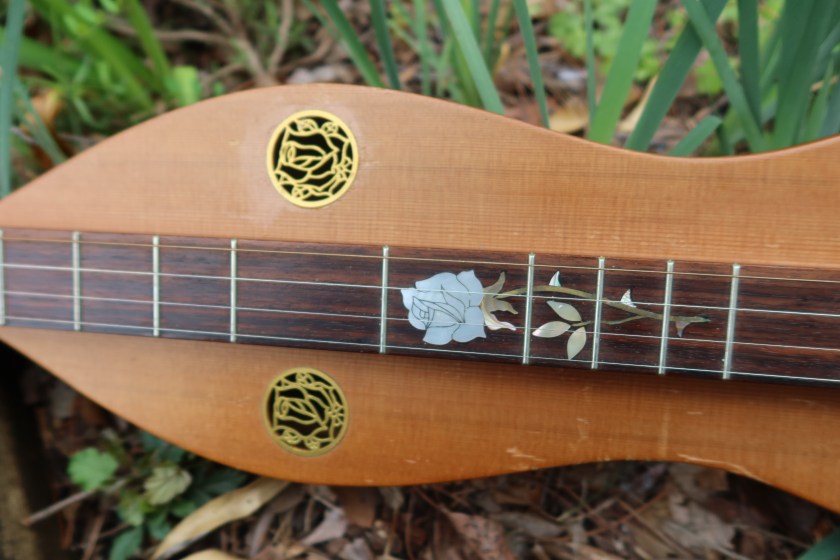
Blue Lion brand of dulcimers are expertly crafted dulcimers with superb tone. These dulcimers are built in California by builders Juanita and Bob Baker. I believe that Bob builds the dulcimers and Juanita does intricate mother of pearl inlay on the fretboards. Years ago, at one of the Appalachian State Mountain Dulcimer weeklong workshops, almost everyone in the audience owned a Blue Lion dulcimer, as shown by a raise of hands. These are popular and well-built dulcimers.
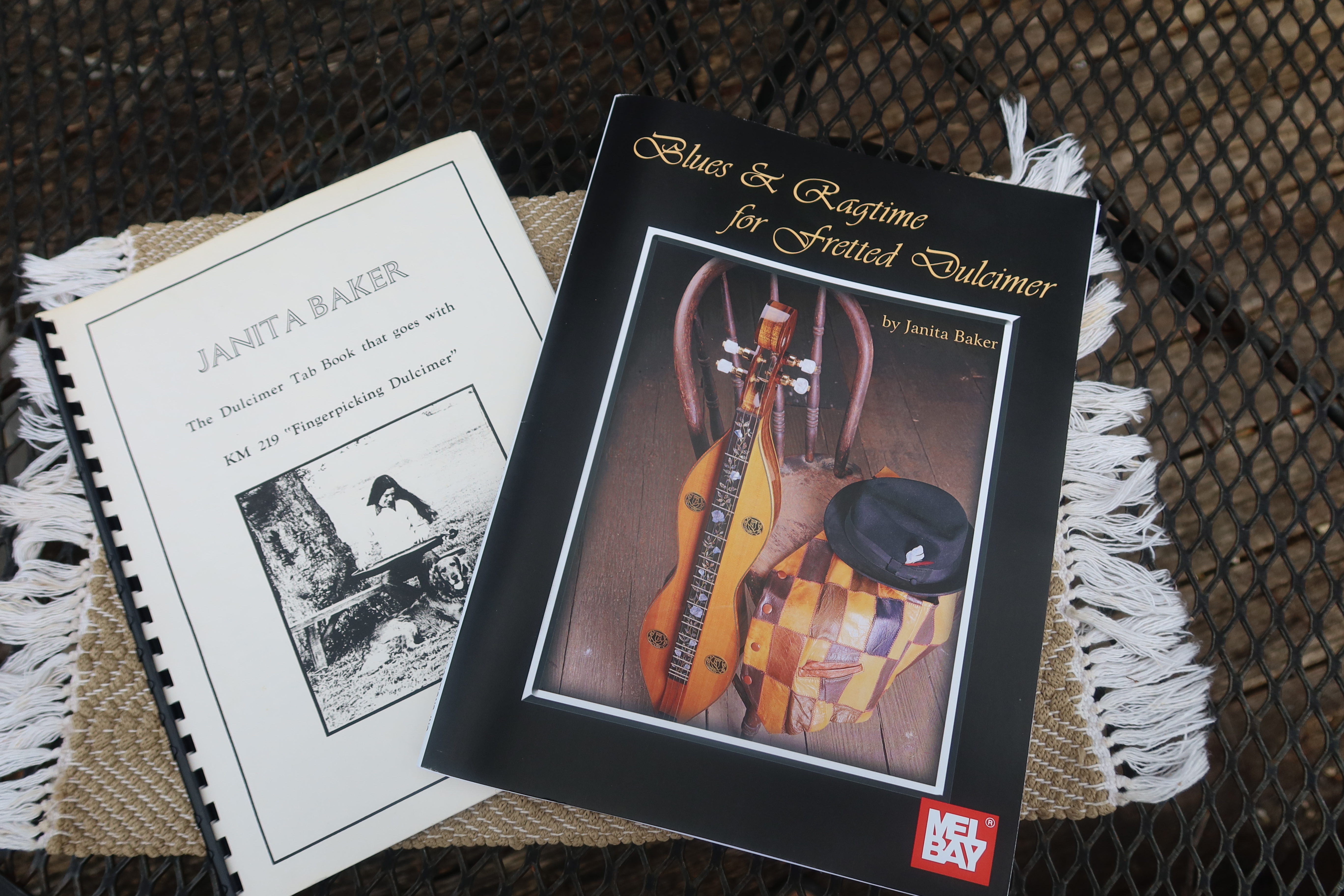
Juanita Baker is also a wonderful dulcimer player and one of my earliest influences. She excels in fingerpicking the dulcimer and playing in a four equidistant string configuration. This allows her to tune the dulcimer in unique tunings so that she can play ragtime, jazz and blues music. The unusual tunings give chromatic notes and fit in well with her fingerpicked style. It is like playing a chromatic dulcimer without owning one. She has authored several books using these tunings. Juanita notes that the books are for intermediate skill levels and up. However, she encourages anyone to try playing the tunes — if motivated and willing to practice. There is a wealth of information, interesting music and tablature arrangements in these books.
About “The Darktown Strutters’ Ball”
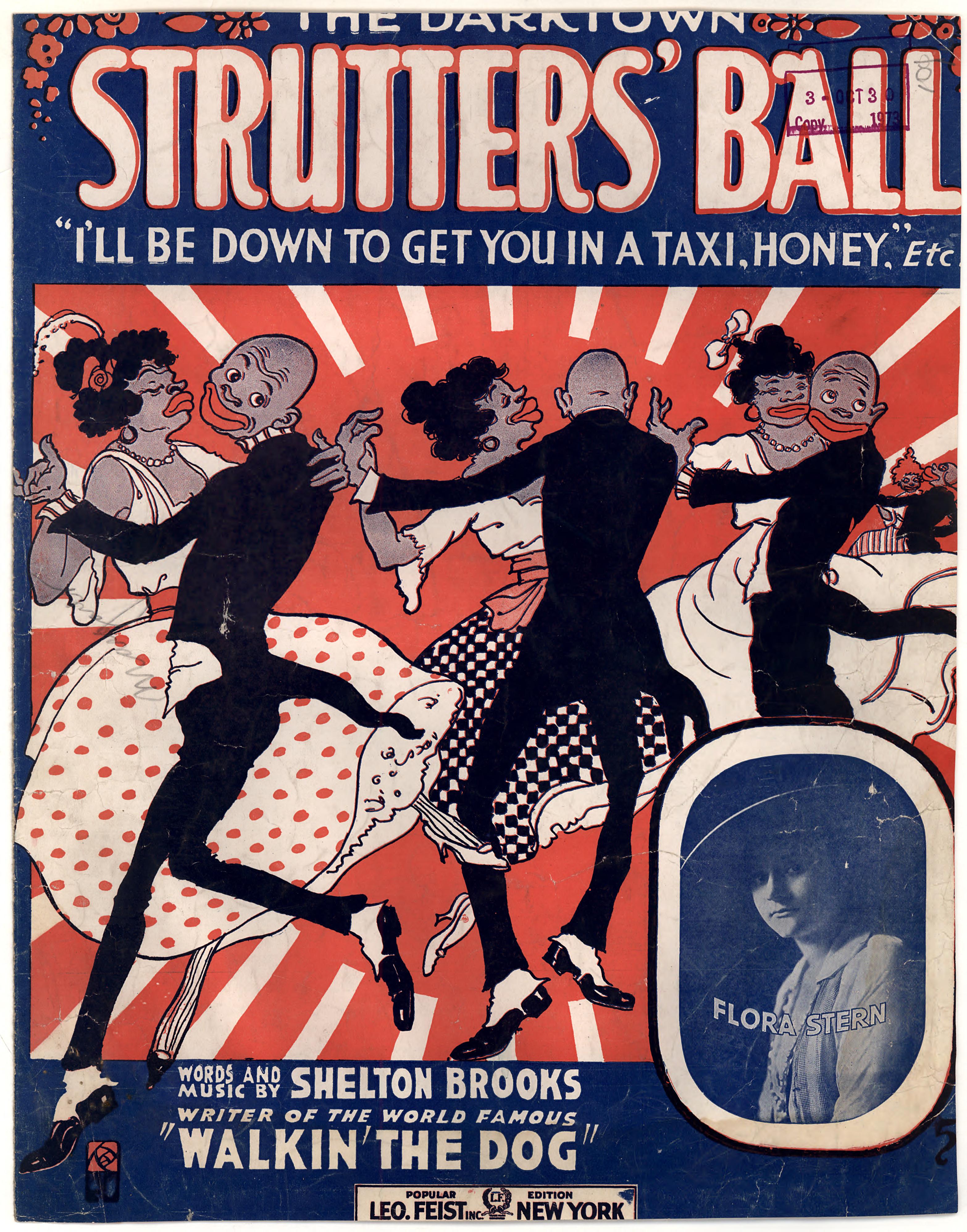
“The Darktown Strutters’ Ball” was written in Shelton Brooks in 1917, during the World War I “musical hall” era of popular and comedic music and emerging jazz songs. The song became a hit for the New Orleans “Original Dixieland Jazz Band.” The song is one of the earliest jazz hits written, selling three million copies of sheet music. And, in that time period, sheet music was the the standard for judging a hit song.

Sheldon Brooks was born in Canada in 1886 and was of African/Indian heritage. His father was a minister and the family moved to Detroit when he was 15 years old. Brooks was musically talented and learned to play piano by playing on the church organ. Although he couldn’t read music, he composed some great hits of the early 1900s. This includes “One of these Days.” During his musical career, Brooks performed in the vaudeville circuit and is known for his vaudeville and ragtime style in addition to composing. He played piano, musical comedy and had a radio show in the 1930s. Around that time, ragtime music faded in popularity.
The tune’s lyrics of “Darktown Strutters’ Ball” tells the story of a suitor who was going to pick up his “honey” and take her to the Darktown Strutters’ Ball. The couple is going to “dance out both my shoes.” Darktown appears to refer to a section of Chicago primarily inhabited by the African-American community. Once a year, the Strutters’ Ball was held. Everyone who was invited — and tickets were coveted — dressed up in their finest outfits and showed off their glamour. It was a chance to step outside of the real world and experience what it was like to be wealthy and rich. Strutters refers to a type of dance step. These Strutters balls really existed in the early 1900s, although it is speculation as to whether or not the lyrics in this song refers to one of the “real” balls.

Notice, ironically, that the “Original Dixieland Jazz Band” was composed of all-white musicians.
Playing the Tune in DAA#D
The “Darktown Strutters’ Ball” actually only has two notes in the refrain which fall outside the range of the dulcimer’s diatonic scale. It is tempting to omit the notes. Another option is to bend the strings to play these notes. (And I included tablature for a 3-string DAD version with bent strings at the end of this post.) However, bending a string to achieve an accidental note can be a challenge, especially when it is an eighth note. And, omitting the notes gives up some of the flavor of the song.
For this exercise, I tuned the dulcimer to DAA#D. The A# string gives all the accidental notes that you need to play melody of this song’s refrain. These notes are the A# (7th fret) and D# (10th fret). Other notes played on the A# string represent harmony notes.

The disadvantage of the DAA#D tuning is that you cannot strum across the open strings without sounding out dissonant notes. You must fingerpick the desired strings and fret the dulcimer in such a way to make a harmonious sound.
Hence, this tune is intended to be fingerpicked, not flatpicked. There are several places where only one of the strings needs to be muted, especially the A# string. To do this, pluck two or three of the desired strings to get the notes you want. Flatpicking becomes almost impossible. Picking only one string loses the sustain of the song.
Of course, in the DAA#D tuning, it is possible to play chords and strum to a limited extent. It becomes a matter of figuring out what frets to play. For example, depress the 2nd fret on the A# string to play a D chord. Another option is to play the 0-5-6 &1/2-7 frets, bass to melody string, to play a D chord. That chord almost sounds like a harp! However, other chords are more difficult to finger.
I intend this to be a fingerpicked tune. For placement of your left hand for fingerpicking, I use my thumb, index and middle fingers on the strings. There are so many “plucks” in this song, that I find it helpful to use my thumb on the melody string and adjust my other fingers to the strings as needed. However, there are many ways to fingerpick; use what is familiar to you.
Here is a template for “Darktown Strutters Ball.” Fill in notes, fingerpick the tune, add plucks, pinches and brushes as needed to play the song. Actually, the left hand fingers and fret placement fall into place easily with a little practice. You do have to “jump” to different strings several times in the arrangement, but with using a fingerpicking style of playing — this isn’t a problem. I use several “barre” chords, fretting down three of the four strings in several places. This arrangement is “achievable” for intermediate and advanced players.
Playing in the DAA#D tuning opens up an entire new world of music. Some of these ragtime, jazz and blue songs are inspiring, beautiful, catchy. I don’t own a chromatic dulcimer and I love to fingerpick. This tuning gives me another option for playing these tunes. They are are worth trying out, if you enjoy fingerpicking.
I am having a fun time with this song, it really grows on you. Thanks Google search for leading me to this jazzy tune, “The Darktown Strutter’s Ball”!
And, after making the DAA#D arrangement, I “fiddled” around and found a DAD arrangement which works too, Just bend the 7th and 10th frets, middle string in a couple of places (or omit these notes).
Attached are JPEG images of the two arrangements. Following are PDF files which you can download, print and share with friends. I only ask that it not be published or uploaded to a public internet site.
Enjoy!


Here is a PDF file which can be downloaded.
 Dulcimer Jambalaya