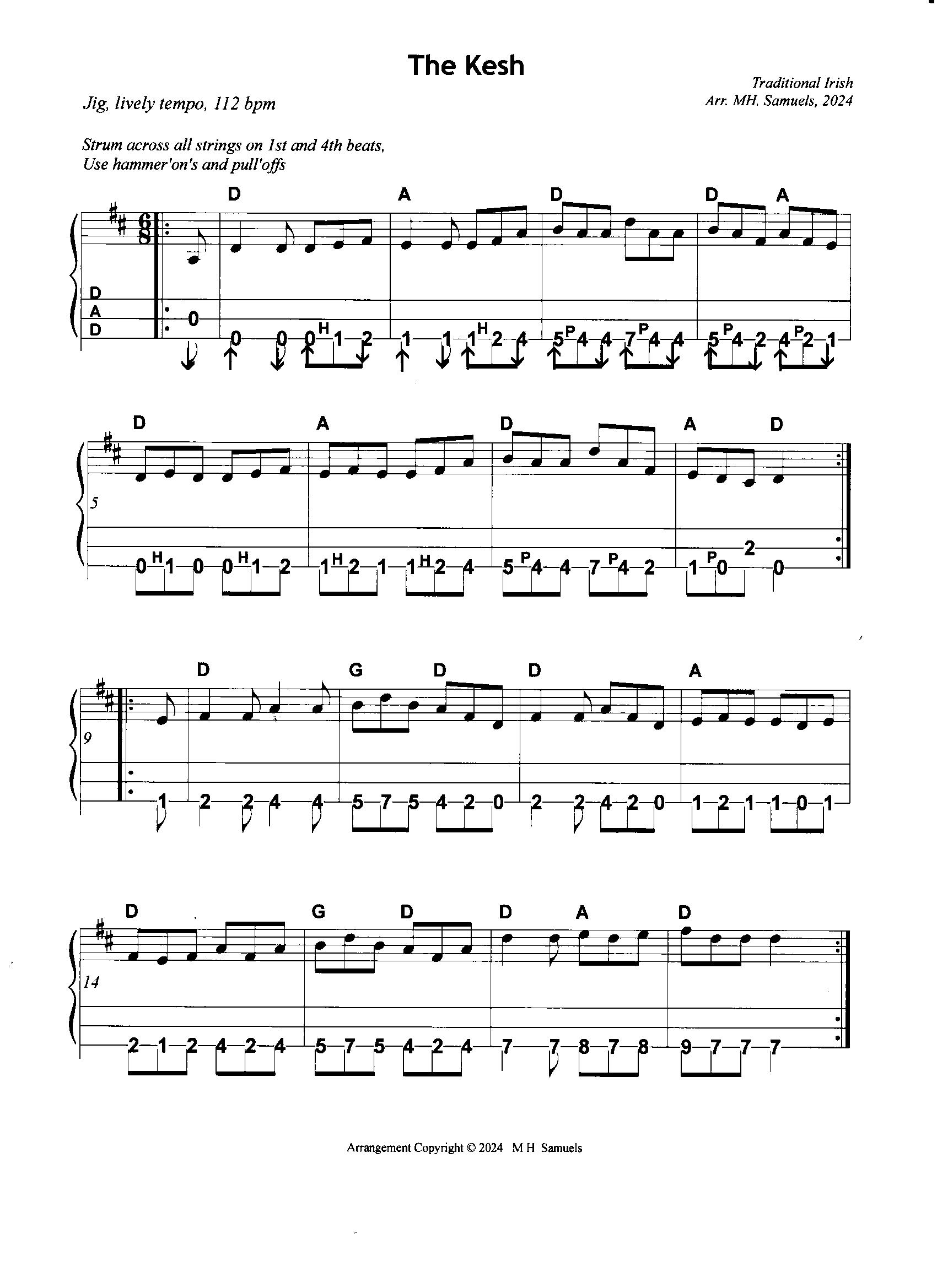
Here’s a lively Irish jig to start off the New Year. I am listing my music goals for the upcoming year and they involve this jig. My first resolution is to learn to play a new music instrument — the Irish penny whistle. Although I have played at the whistle for several years now, sadly, I don’t keep it going. So, my plan is to pick up the whistle again and really fly. My second goal is to play the dulcimer in a cleaner manner at a faster pace. That means, perhaps, playing tunes which aren’t so difficult. “The Kesh” is a common jig played in Irish sessions. It is considered to be a beginner’s tune, at least by the McNeela Irish whistle folks. So, I decided to start the new year by learning and playing “The Kesh” both on my mountain dulcmer and penny whistle.
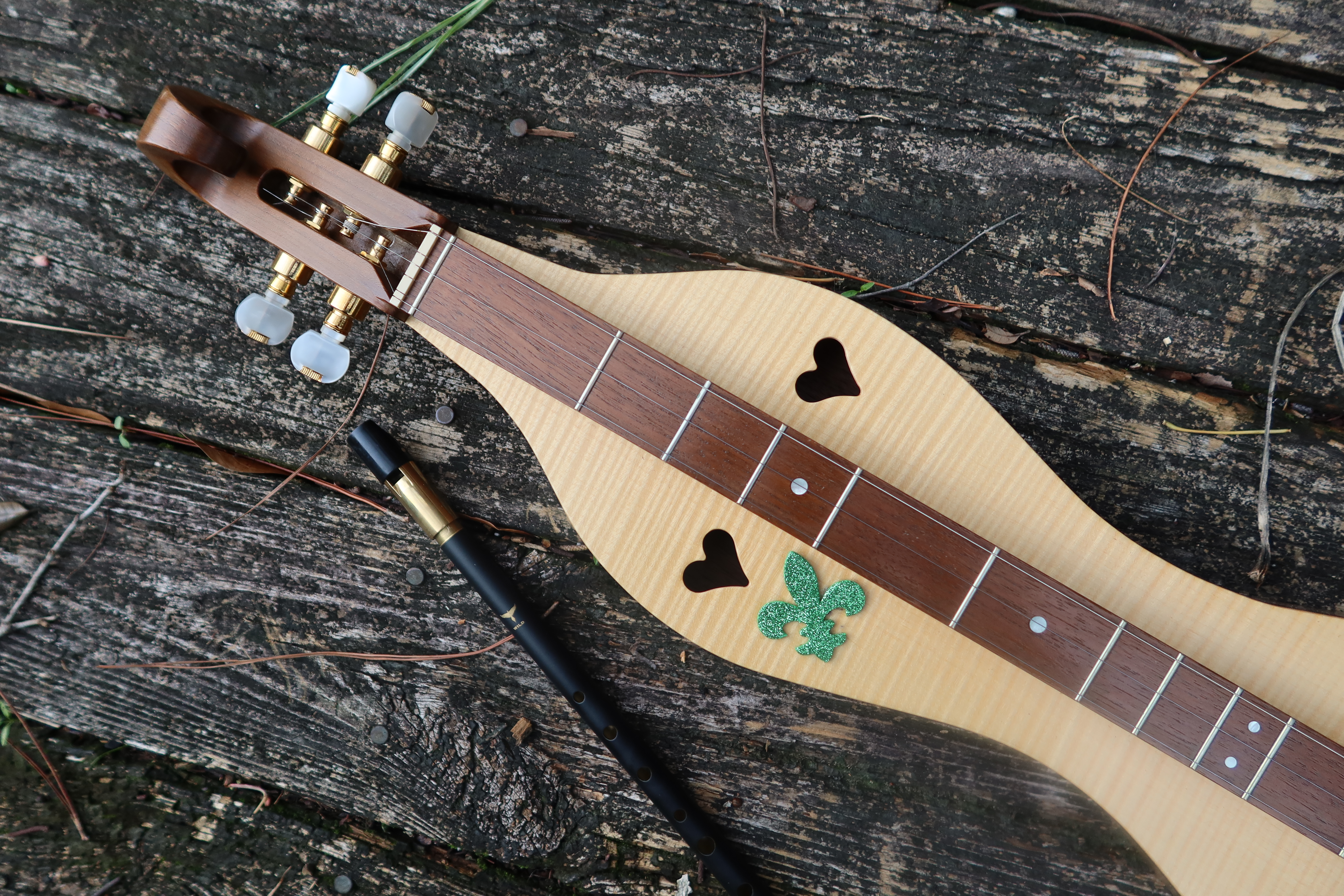
Can we do it?
This jig is played at a sprightly pace in recordings by Irish artists — that gives me something to work towards. Of course, I’m going to begin by playing slowly on my dulcimer. By using lots of hammer-on and pull-off ornaments, it is achievable to play on the mountain dulcimer at a fast clip. And that’s the key. Without adding these ornaments, I’m not sure that my left hand fingers can maneuver rapidly on the dulcimer or that my right hand strum can keep up. Fortunately, this is another one of those “addictive” tunes which I can play for hours at a time. It is just muscle memory and involves alot of practice. Hey, I already have the tune memorized on my penny whistle.
Just how fast is a jig played?
What tempo do you play a jig? From what I can tell, the answer is really, “it depends.” For a contra-dance, the tempo of a jig is 112 – 120 beats per minute. This beat counts two dotted quarter beats per measure which amounts to a sprightly walking pace or skip. That’s apparently how dancers move their feet during a jig. If you are not playing a contra dance, the answer is to play the tune at the tempo that you are comfortable with. For me, that is much slower. For an experienced Irish musician, that is much faster!
Playing at a fast tempo on the dulcimer
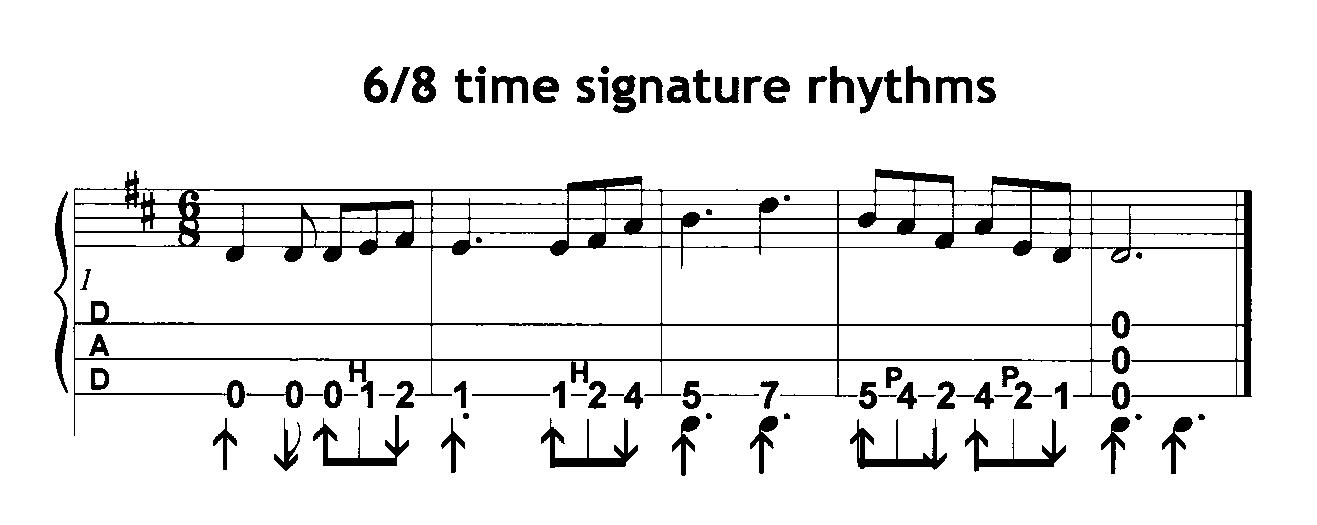
To play any tune at a quick pace on the dulcimer, the strumming pattern has to be consistent and one which allows you to play rapidly. When playing in 4/4 time signature, struming outwards (or inwards) on each beat works great. Play the eighth notes as you come back across the strings in the opposite direction to keep up the strum pattern consistent.
However, songs in 6/8 time signature work a little differently. If you try to strum on every eighth note beat in the same outward (or inward) direction, you will soon be left behind. I find it most efficient to strum out on a quarter note and back on the eighth note — making a dotted quarter note. Do this for two dotted quarter note beats in the measure for 6/8 time signature. My goal is to keep this up the entire song; playing the “passing notes” with hammer-on’s, pull-off’s and slides.
Penny Whistles
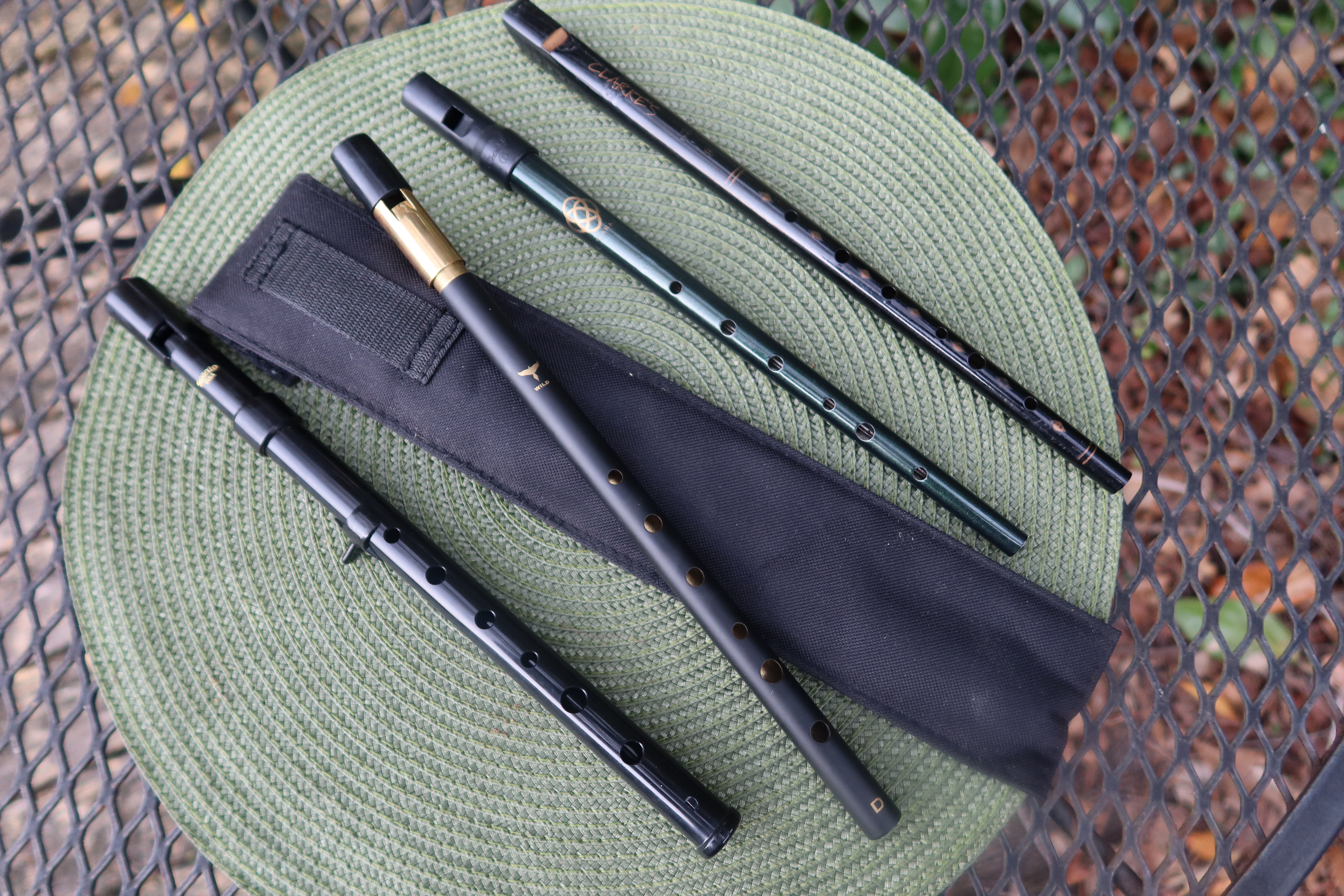
Penny whistles are alot like dulcimers in one respect — every brand feels and plays differently. Some are more “breathy” while others are more “crisp” or “shrill”. I have accumulated several brands of penny whistles over the years. I seem to gravitate to a Susato brand penny whistle in the key of D. I also have a McNeela Wild Irish whistle which is heavier, more expensive and has much more volume. My first penny whistle was a Clarke brand which I purchased for about $10.00. They claim that their whistle is “the real thing.” Woah, I have two types of Clarke whistles.
Like any new instrument, playing the penny whistle involves “muscle memory.” Memorize the fingering for the notes. There is more skill to playing a penny whistle that I first realized. Breathing techniques are important as are all the many embellishments which give a song character. There are plenty of “learn to play the penny whistle” books around. However, an on-line course (or in-person course) provide skills and techniques which aren’t obvious in books. Well worth the money.
New Year Resolutions
So, there. I have two music-related resolutions for the new year. The key is practice. Each time I pick up the penny whistle, I get a little better. This time I’m going to persevere and get to where I can really enjoy it!
About “The Kesh”
“The Kesh” is a traditional Irish jig which goes back a long time and is know by many other titles. Plus, there are many other similar tunes. The first know publication of this tune was in George Petrie’s 1850’s collection of Irish tunes. The Brothy Band, a traditioinal Irish music band, popularized the tune again in the mid-1970s and it became a common jig at Irish sessions — or what dulcimer players refer to as “jams.”
Playing the tune on the dulcimer
Similar to other Irish “sessions” tunes, there are so many variations to the basic tune, that there really isn’t one “tune.” The passing notes and embleshments provide the variation for the written music. For my “tune” I used parts of several tunes listed on Irish music sites. The first four measure provide the basic “tune.” Then in measures five though eight, I added filler notes for variation. I used the same idea in the second half of the tune.
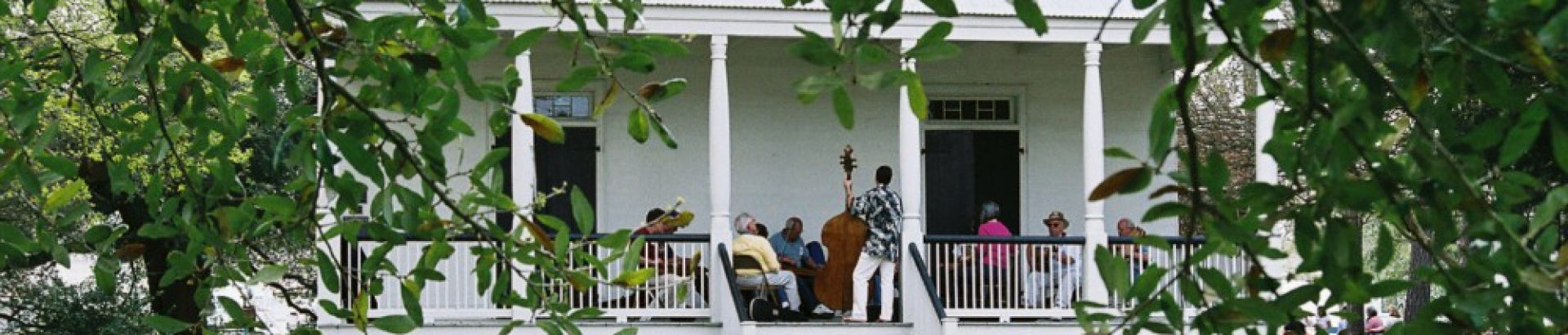
This tune isn’t really a good one for dulcimer jams, in my opinion, where everyone is playing “in unison.” It would be difficult to stay together. It might be more fitting to play in a band or ensemble where each instrument — fiddle, penny whistle, guitar, banjo, dulcimer, etc. — takes a turn at playing the “lead” as a solo while the other instruments play backup. I have included chords for this purpose.
Practice makes perfect, I plan to practice until I’ve got it! Enjoy this Irish jig for the new year. Here’s my variation of the tune, in Jpeg and PDF formats.