
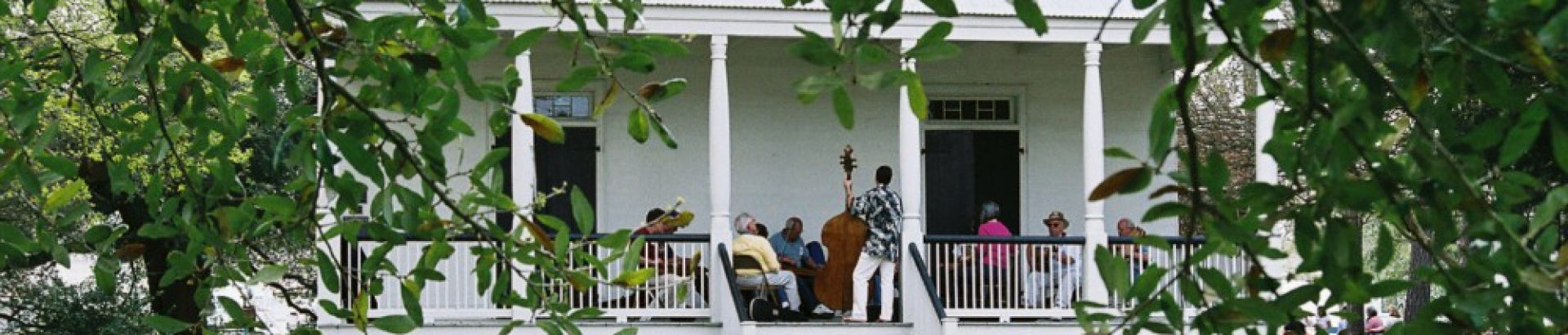

What’s this? Beginning dulcimer players often ask about the little wooden stick which accompanied their new dulcimer. Why, it is a “noter,” I will answer. And I add, “don’t throw it away — let’s use the noter.” We can play some appealing and striking music on the mountain dulcimer using a noter. Using a noter and a turkey quill (for a pick) is one of the most traditional ways to play a dulcimer. The drones really sound out with this style of playing, giving sort of a modal — ancient and haunting sound. The beautiful hymn, “Resignation,” shines when played with a noter. Plus, “Resignation” includes alot of eighth notes and it is a good song to practice “out and back” strums while changing frets.
Traditional Way to Play the Dulcimer
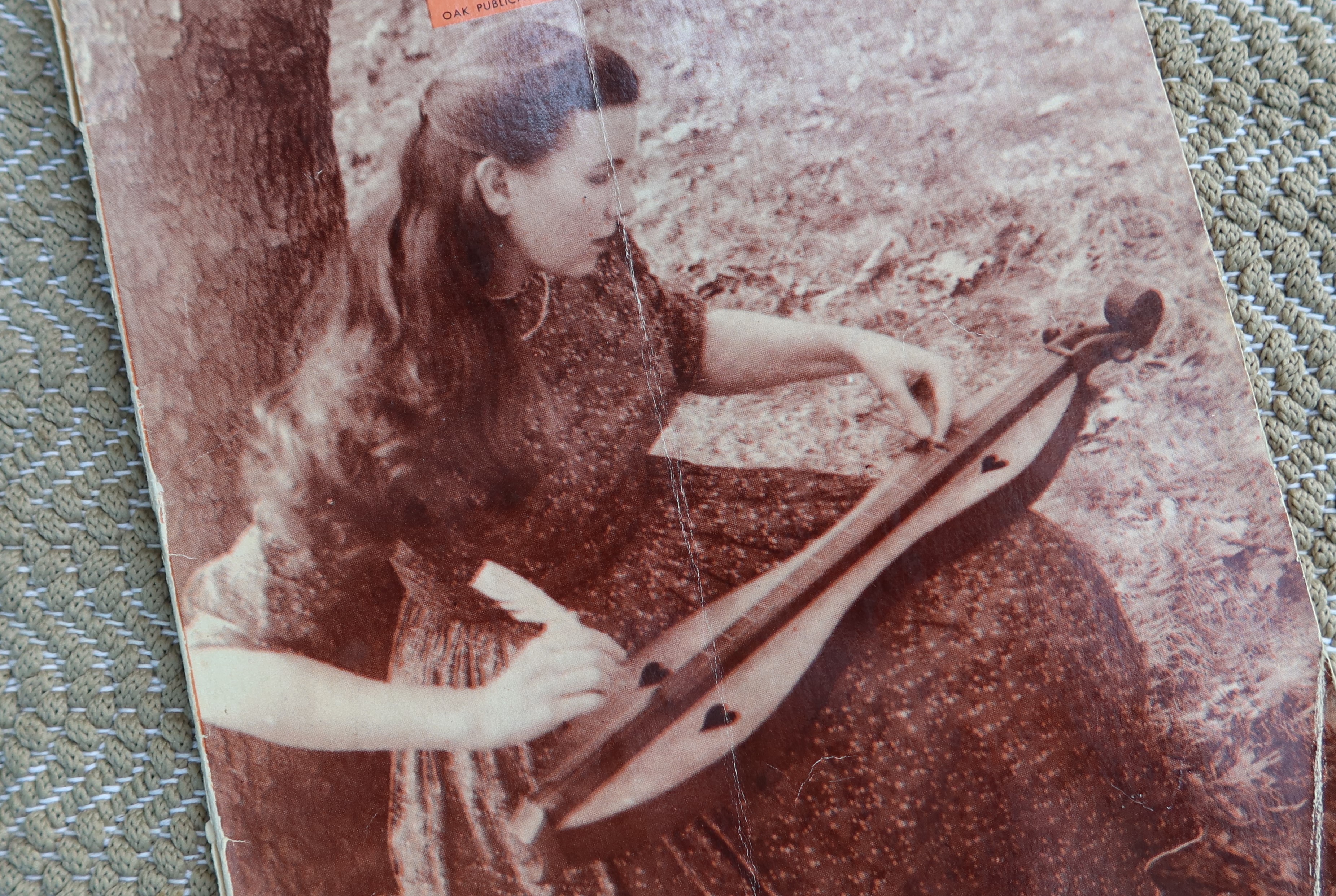
Using a noter is a very traditional style of playing the of dulcimer. It is worth exploring how to use the noter to play songs. Traditional, older dulcimers had longer scale fretboards and they didn’t have the 6-1/2 fret. They were intended to be played in the DAA tuning or any 1-5-5 tuning (for example, CGG). These long-scale dulcimers sounded great at higher frets. Over the years, dulcimer building has changed — dulcimer bodies are larger and the fretboards are shorter to accommodate the DAD tuning and playing chords. However, a noter can be still used with contemporary dulcimers. Here is one of the longer-scale dulcimers which I purchased in the North Carolina mountains in the 1980s.

Jean Ritchie
When I think of using a noter, I think of Jean Ritchie. Born in in Kentucky in 1922, she came from a singing family. Her father played the dulcimer and Jean learned at an early age. Upon moving to New York City to pursue a career as a social worker, Jean continued to perform, sing and play the dulcimer and she was quickly “discovered” by folk music collectors and enthusiasts. Her beautiful voice complemented the dulcimer perfectly. Jean often used the dulcimer as a harmony “voice” to her singing and she frequently used a noter. And Jean tuned the dulcimer to many different keys and modes! Quite progressive. Her dulcimer singing and performing in New York City is largely credited with keeping dulcimer music alive today.

Pentatonic Scale
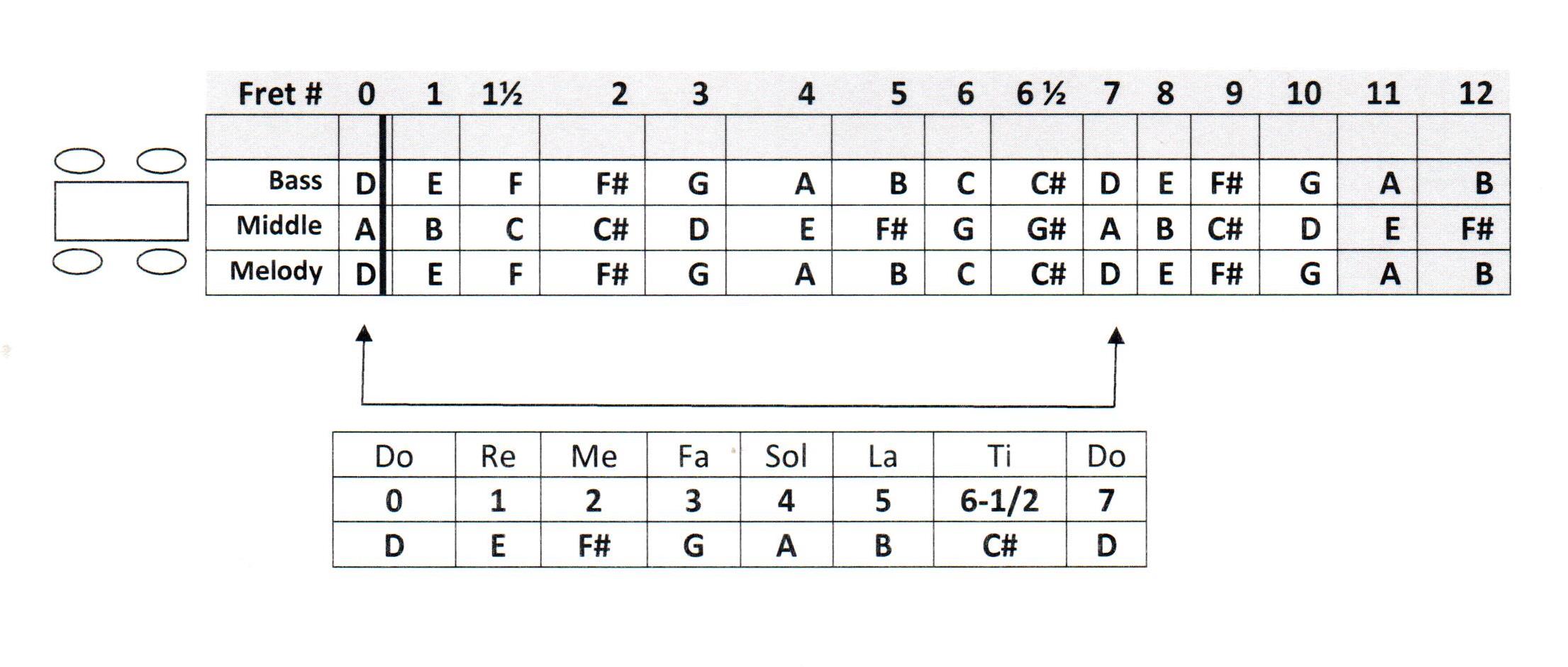
“Resignation” is a great tune to play with a noter. The song is based on the pentatonic tune. This means that there are only five notes in the scale. To visualize this, the tune includes only the black notes of the piano. For a dulcimer tuned to DAD, the omitted notes are the 3rd and 6-1/2 frets (G and C#). In practical terms for dulcimer players, it means that omitting these two notes allows a person to play the melody only without harmony notes and discordant tones. Playing the song’s tune on the melody string with the other strings sounding as drones is pleasing to our ears and results in a haunting, sort of medieval tone. No need to fret the other strings or add chords.
Familiar Pentatonic Tunes
The pentatonic scale has been around for thousands of years and it is still used as the basis for many contemporary tunes. Ancient flutes were tuned to the pentatonic scale. For example, an Ice Age bone flute discovered in 2008 was made from a vulture bone which had five holes tuned to the pentatonic scale.
The pentatonic scale is used extensively in folk, pop and church music. You will recognize many tunes which are based on this scale, probably without realizing that they use this particular five-note scale. These songs include “Amazing Grace,” “Tom Dooley”, and “Auld Land Syne.” American folk tunes using the pentatonic scale include: “When the Saints Go Marching In,” “How Firm a Foundation,” “How Can I Keep From Singing,” “Come Thou Fount of Every Blessing,” “Camptown Races,” “Old Dan Tucker,” “The Arkansas Traveler” and “Swing Low, Swing Chariot,” and the Japanese folk song: “Sakura Sakura.” The list goes on and on.
Even modern pop and rock songs use pentatonic scales. Some of these songs include: “Heartbreaker” by Led Zeppelin, “Honky Tonk Woman” by The Rolling Stones, “Stairway to Heaven” by Led Zeppelin. “Sweet Home Alabama” by Lynyrd Skynyrd, “Delicate” by Taylor Swift, “Shape of You” by Ed Sherran.

About the hymn tune, “Resignation”
Resignation is an anonymous tune from the Southern Appalachians. It is an old tune and is included in several shape-note hymnals. William Walker collected and first published the tune in 1835 in the shape note hymnal, Southern Harmony and Musical Companion. Walker’s brother-in-law, Benjamin F. White, was miffed that he didn’t recieve credit for his work with Southern Harmany, So he and E.J. King published another shape note hymnal, The Sacred Harp, in 1844. This led to a rivalty between the tunebooks. Both of these shape note hymnals are still in use today.
As with many of these old hymns, the melody and lyrics were written at different times and paired together by the music publisher. And this was the case for “Resignation.” Walker used Isaac Watt’s (1674-1748) text for the lyrics. That pairing continues today in many contemporary hymnals and we often recognize this song title by the lyrics, “My Shepherd Will Supply My Need,” and not the tune name, “Resignation.”The lyrics are based on Psalm 23, one of our best known and beloved psalms.

Using a Noter to play the Dulcimer
A noter can be an elaborate stick or any plain, small round or flat piece of wood. A dowel rod, popsicle stick or half a clothespin can be used. Anything that you can easily hold in your hand.
How is a noter used? When using a noter, the melody string(s) — and only the melody string(s), is depressed with the noter. The melody to the song is played by sliding the noter up and down the fretboard on the melody string with your left hand while strumming with your right hand. The middle and bass strings sound out as drones.
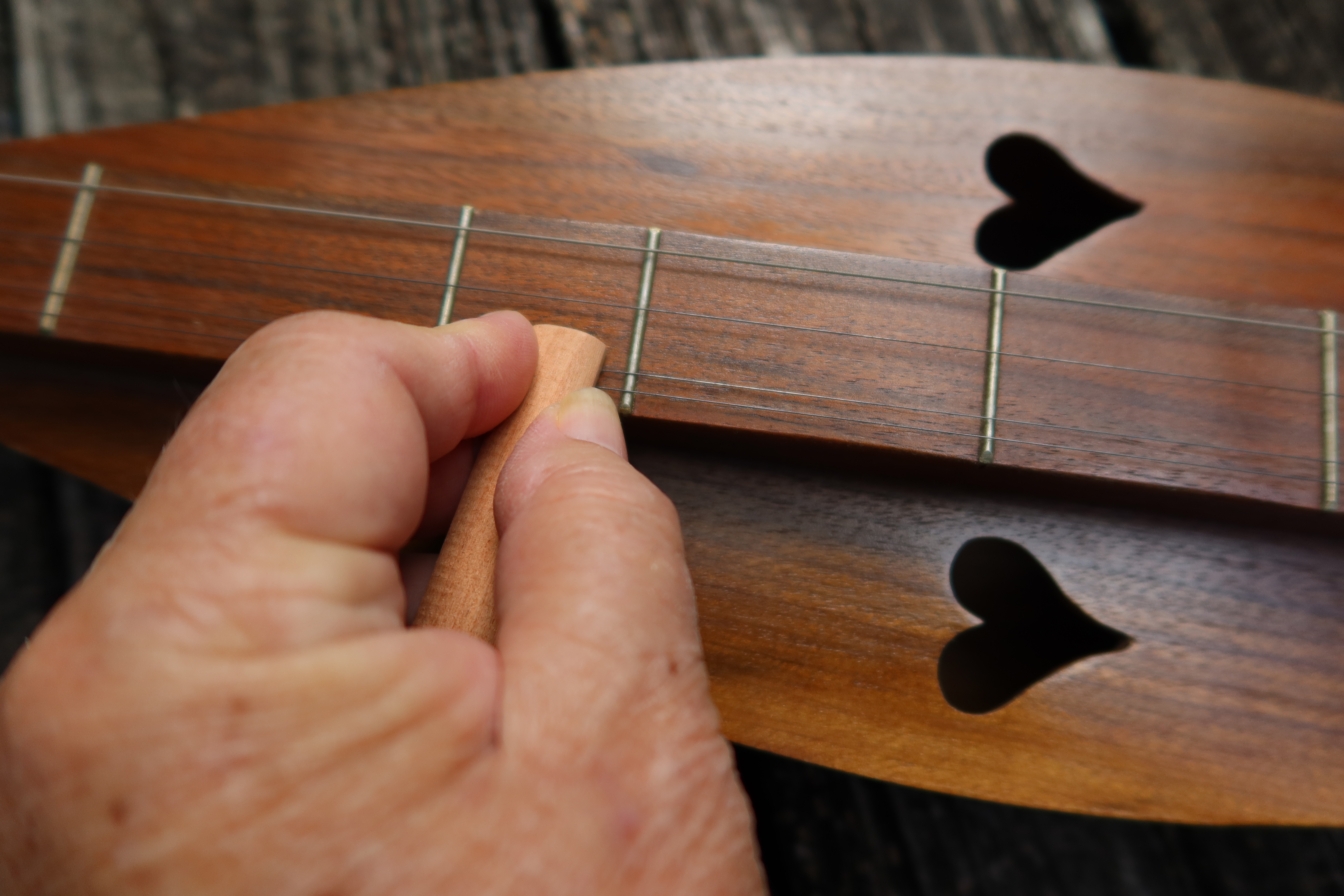
The noter is held somewhat a bottle pop opener. Hold the noter down securely against the fretboard with your index finger and thumb over only the the melody string on the fretboard. Rest your middle finger against the side of fretboard to secure placement of your fingers. I used to use the example holding a noter like a bottle pop opener. However, after taking a class using the noter, taught by Audry Atwater, I’ve modified my instructions just a bit. Audry holds and secures the noter with both her index finger and thumb — not just the thumb. This is much easier and makes more sense.
The challenge with to using a noter is to get it to “glide” over the strings without hitting the frets. You don’t lift the noter off the strings, just soften the pressure on the strings to move the noter up and down the fretboard. This takes practice!
Traditional Style of Playing: DAA Tuning
The DAA tuning is a traditional tuning used with the dulcimer. It is termed the “Ionian” tuning or mode. Noters are often used with the dulcimer tuned to DAA (or other 1-5-5 tunings).
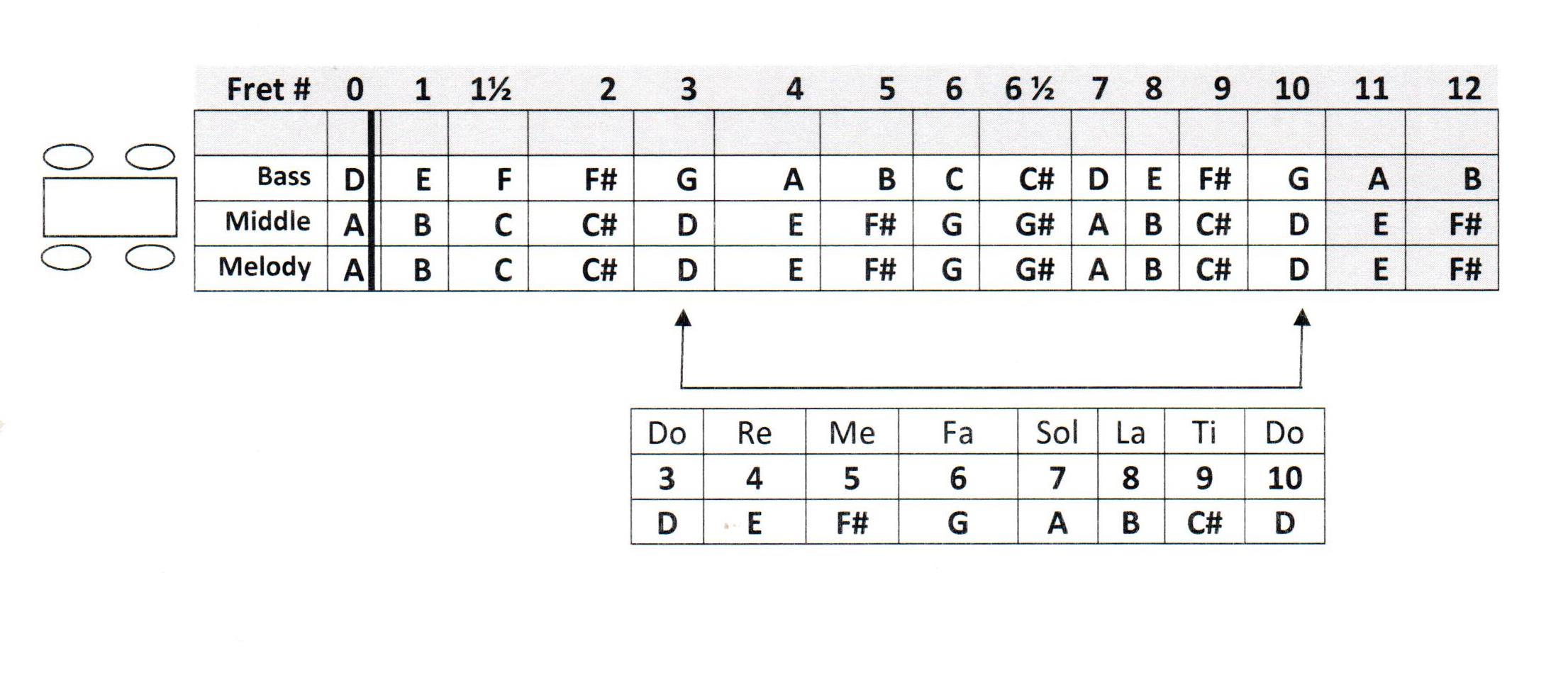
The DAA tuning has a couple of distinct advantages when playing with a noter. The scale goes from the 3rd fret to the 10th fret. When the song’s melody goes below the keynote of the song, then you have addtitional frets to play. Often, you can play an entire song without crossing over to the middle string to play melody notes.
These traditional dulcimers often had longer fretboard lengths. The higher notes on the fretboard rang out with vibrato and sustain making a beautiful tone. Not so with many shorter fretboard length dulcimers which lose their sustain at higher frets.
DAD Tuning
When dulcimers are tuned to DAD, you lose the lower three frets. If you try to play a song with a noter, and the melody contains lower notes, you’re out of luck. This limits the tunes which can be played with a noter when tuned to DAD.
Playing the Hymn, “Resignation” in DAD tuning with a noter
Think phrases. “Resignation” is easier to play on the dulcimer than it looks. It is often included in hymnals in the 3/4 time signature. The hymn can be played at a leisurely pace. However, this is not a waltz. For this song, think of “phrases” rather than measures. Keep an even beat entirely through the entire first line, not measure by measure. There is no “um-pa-pa” beat in this song.
The song’s pattern is AABA. This means that the first, second and last line are identical. Only the third line is different. So, a person has to learn two only phrases to play the entire song. Further, each phrase ends on the tonic, or key-note. With the dulcimer in DAD tuning, this is either the “zero” fret or the “seven” fret.
Playing Eighth Notes with the “Out-Back Strum” to avoid a “choppy” song. “Resignation” is a good one for beginners to practice the “out and back” strum. This tune has lots of eighth notes which change frets on each strum. Even though this song is played at a leisurely pace, playing with expression and grace is important. Playing with an “out-back” strum on these eighth notes helps continue the sustain and vibration of the strings and avoids a “choppy” strum.
Omitting fret numbers in the tablature. Although this tablature show fret numbers on only the melody string, it is intended that you strum across all the strings. The “zero” fret numbers are omitted so that is easier to read the tablature. No need for chords or harmony notes on the middle and bass strings.
Enjoy this beautiful and haunting song. Play slowly and evenly.
Following this JPEG image there is a PDF file which you can print out and share.

References:
https://www.percussionplay.com/
William Walker (1809 – 1875) was a Southern Baptist singing school teacher also known as “Singin’ Billy.” His Southern Harmony hymnal, sold over six hundred thousand copies over the next thirty years. https://hymnary.org/hymn/LUYH2013/369
https://liftupyourheartshymnal.org/songs/my-shepherd-will-supply-my-need
 Dulcimer Jambalaya
Excellent content and information. I aim to reread it many more times!
LikeLike
Thank you, I hope you enjoy my blog and find the songs and music to be useful!
LikeLike