
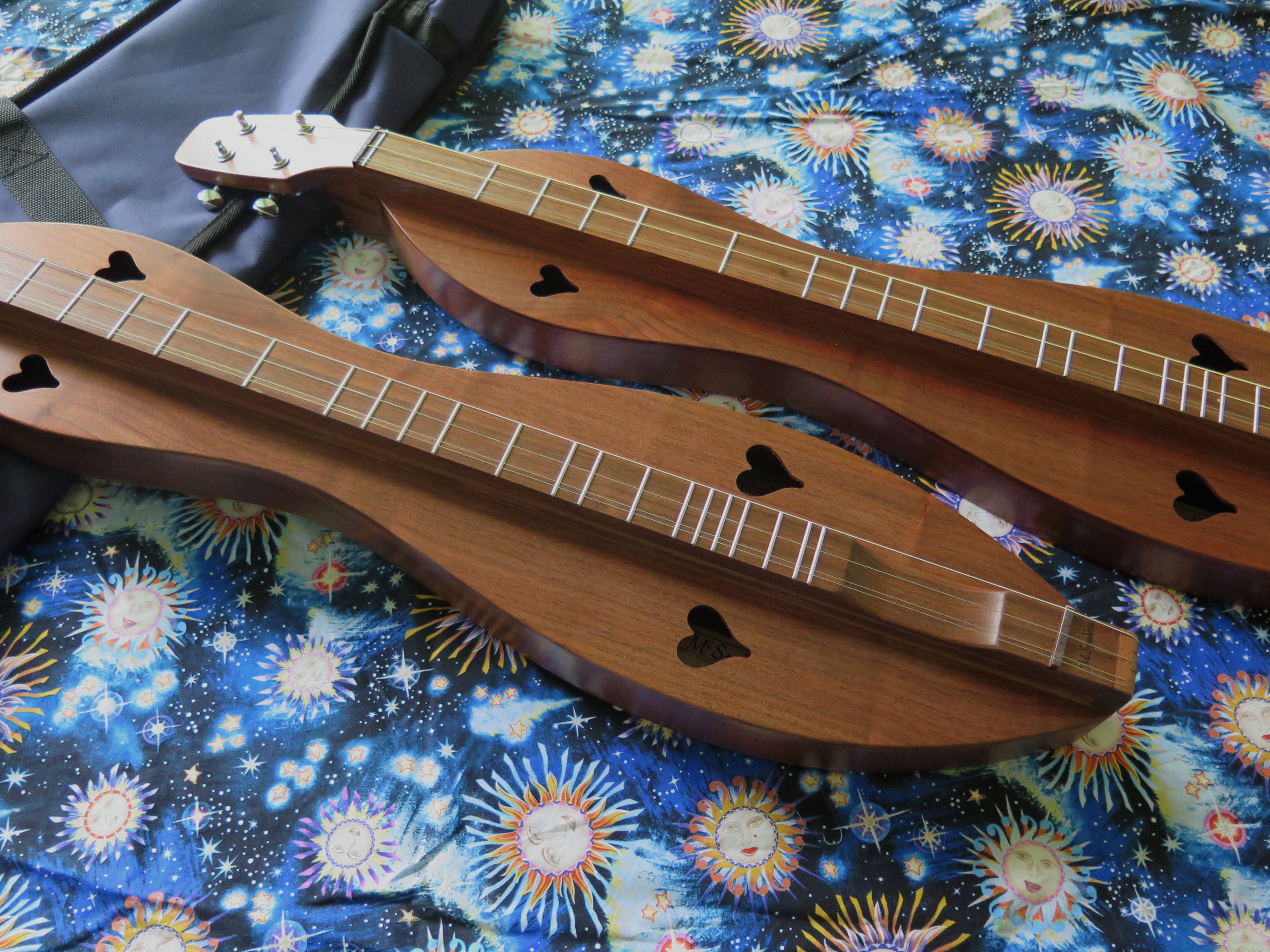
Recently, I was sorting through boxes of “stuff” brought from my parent’s estate. I found an old hymnal published in 1901. The songs were catagorized by “themes” and published in shape note style. I recognized only a few of the songs. One was “Holy Manna” which was written in the early 1800s. I immediately thought of the DAA tuning. This song, “Holy Manna,” has many notes which go below the Keynote of “D” so it is well suited for playing in the DAA tuning on the melody string. Plus, it is a pentatonic scale song — using only five scale notes — and sounds great with drones rather than alot of harmony notes. In my opinion, we don’t use the DAA tuning enough. So, I reached for a special dulcimer which was handmade for me by McSpadden Dulcimers using a walnut log from my father. I tuned it to DAA and wrote tablature for the song, “Holy Manna.” I find that this is a rhythmic, mesmerizing song.
Holy Manna
Holy Manna is considered to be one of the oldest traditional American folk hymms and has stood the test of time — it continues to be published in modern hymnals. It was published by William Moore (1790 – 1850) in Columbian Harmony, a four-note shape-note hymnal, in 1829. The tune was originally written for the words, “Brethren, We Have Met Together.” It was intended to be sung without accompaniment — just a cappella.
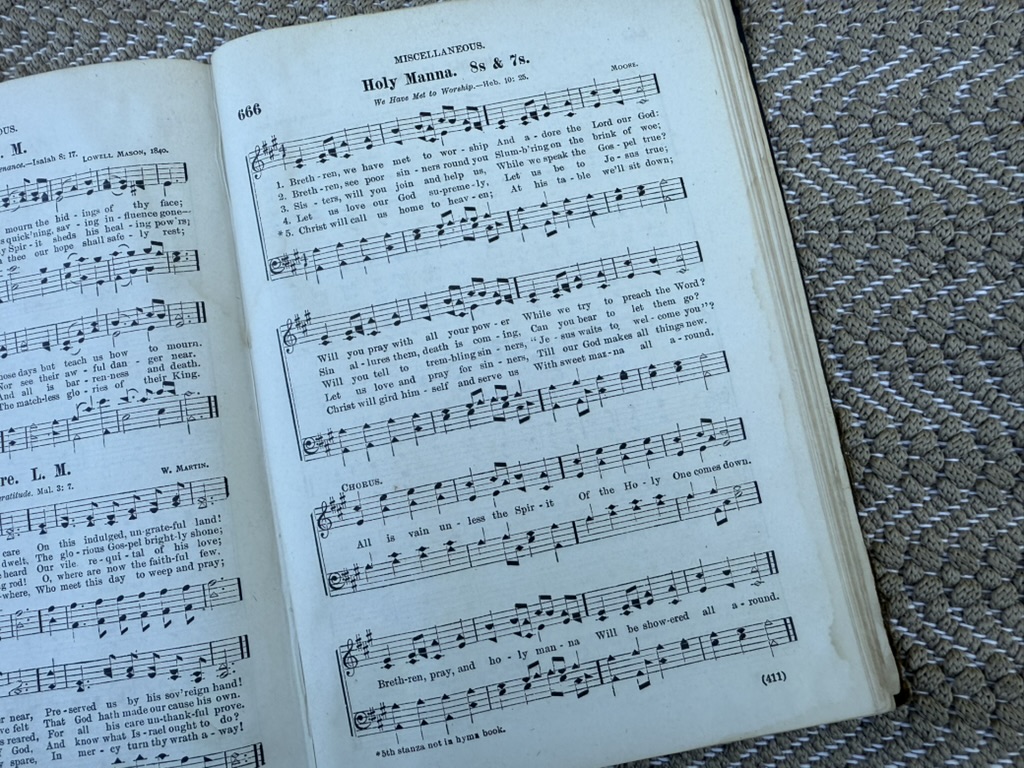
“Holy Manna” is a “pentatonic” scale tune. Only five notes make up the melody. (Other pentatonic tunes include “Amazing Grace,” “Auld Lang Syne” and “Tom Dooley.”) The song sounds great when the middle and bass strings sound out as drones. No need to play harmony notes.
My hymnal was published in 1901 by the German Baptist Brethren demonination in the shape note style. It must have been used by our local congregration in early years (however, it does not appear to be worn at all — just very old). During those years, many of these traditional demoninations were undergoing splits and changes as the world became more modern. The identity of traditional values vs assimilating modern values (automobiles, telephones) split up these demoninations. Our church was the progressive kind — and we took to all the latest trends! (Although the story goes that my great-aunt couldn’t figure out how she was going to climb up the telephone pole to make a call — when the lines were first being installed!)

Traditional Mountain Dulcimers
Years ago, most mountain dulcimers were built without a 6-1/2 fret. Folks played in the DAA tuning, otherwise known as the Ionian Mode. Songs were played on the melody string with the other strings sounding as drones. Even 20 years ago, when I began teaching classes in the local LSU Leisure Class program, probably half the students came with dulcimers without a 6-1/2 fret. So, I taught those classes in the DAA tuning.
However, things change and dulcimer playing has changed. Dulcimers are often built with a shorter fretboard vibrating length, with a 6-1/2 fret and tuned to DAD. It is easier to play and reach chords and harmonies. An entirely new world of music has emerged.
DAA vs DAD Tuning
But, let’s not forget about the DAA tuning. It has advantages. Let’s see how the two tunings — DAA and DAD compare.
The “do, re, me” D-scale in DAA tuning goes from the 3rd to the 10th fret. You use the “6” fret and not the “6-1/2 fret.” The “keynote” of the scale — or the D note — is the 3rd fret. Songs in the Key of D always (well, almost always) end on the 3rd fret — or the 10th fret.
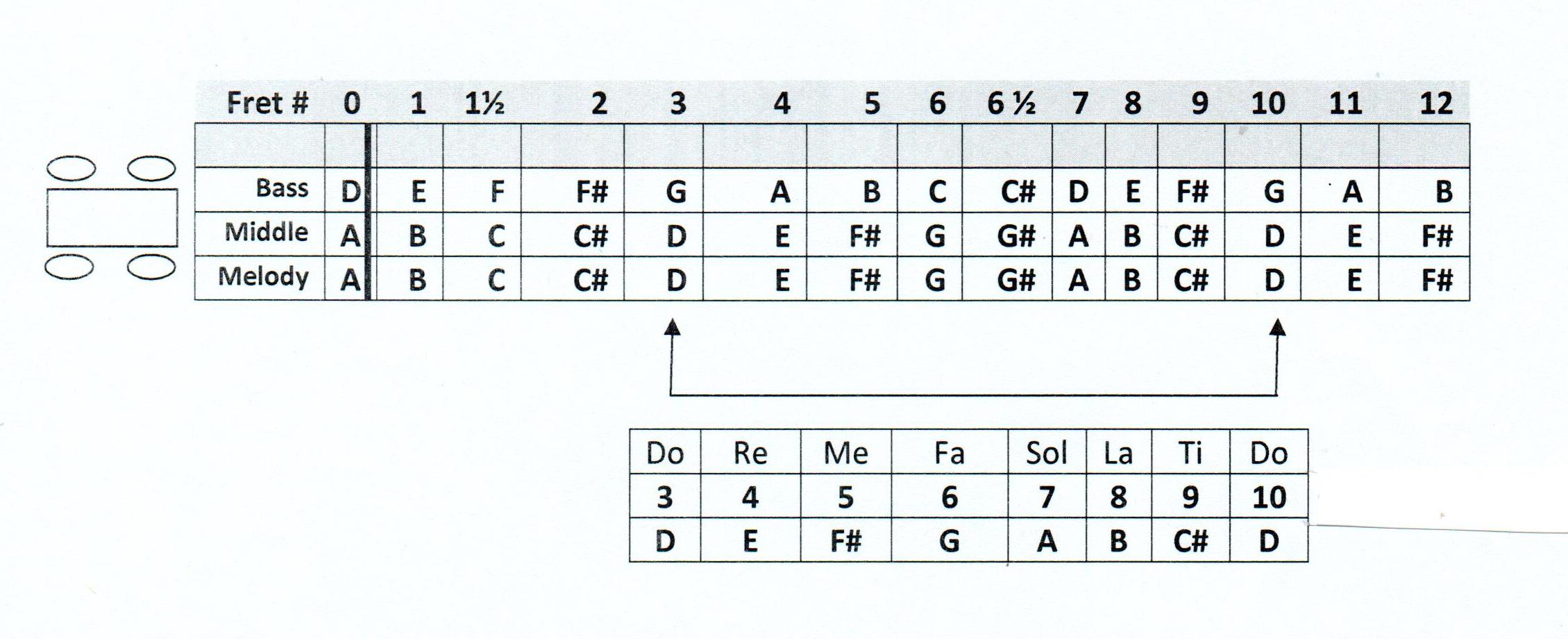
In comparison, in the DAD tuning the D-scale goes from the 0 fret to the 7th fret and uses the “6-1/2” fret. In DAD tuning, songs end on the “0” fret — or the “7th” fret.

Look closely; you are playing the same musical notes whether tuned to DAA or DAD. So, you can play two dulcimers together — one tuned each way. Just follow the correct tablature for either the DAA or DAD dulcimer.
Several advantages of the DAA tuning, are:
- The melody of the song is oriented from the 3rd to 10th fret in an area where the dulcimer is centered on your lap. Easy to reach the notes; to see the scale.
- Many song melodies go below the “D” note — and the DAA tuning has 4 extra notes on the melody string. So, you don’t have to cross to the middle string to play the song. Often playing in DAD tuning on the middle string results in a “muddled” sound. In DAA tuning, no problem with this.
- You can devise some simple harmonies in this tuning to go along with each song — to accompany your singing voice.
Playing “Holy Manna” on the dulcimer
I love the melody, as well as lyrics, to this song. It is simple and rhythmic, yet rousing, encouraging, inspiring. I could play over and over. Although I intended the tune to be strummed, it sounds really nice when I fingerpick it on this walnut dulcimer. The dulcimer vibrates and the notes ring out!
For this song, strum across all strings. Let the drones sound out. (I omitted tablature numbers on the other strings for easier reading — plus the middle and bass strings are all “zeros”.)
The song is a hymn — played at a moderate tempo, I’d say. No need to try to rush like a fast fiddle tune.
The song does include eighth notes. I encourage a “back and forth” strum on these notes to make for smoother playing. (Another reason not to play too fast.)
As with many hymns, the first, second and last line are the same. Wow, you only need to learn to play 2 different lines — the first and third.
This song seems to move along in “phrases” just as a person sings. Emphasize the first note of each phrase — about every other measure.
I included both DAA and DAD tab. You can compare the notes — and observe how many are played on the middle string in the DAD tuning.
Each dulcimer which I own has its own “voice.” This walnut dulcimer sounds great when played in a slower, rhythmic fashion or when it is fingerpicked.
Enjoy the song!
PDF versions of the DAA and DAD tablature follow. Please print out, copy and share. Just don’t publish or upload to a public site. Thanks.


 Dulcimer Jambalaya
Tablature for DAD tuning is missing. DAA tuning was posted twice.
Kathy Rozick scitten@aol.com
LikeLike
Sorry, will fix it. Thanks for pointing it out.
LikeLike