With St. Patrick’s Day rapidly approaching, it’s time to feature an Irish tune. Over many years of playing the dulcimer, I’ve grown to appreciate and enjoy Irish music. I have to admit, that I really didn’t have much of a repertoire of Irish tunes when I began playing the mountain dulcimer. But that changed when I met folklorist and New Englander, Dallas Cline. This dulcimer player is a walking encyclopedia of folk music. She was very involved in the folk music scene in Connecticut and greater New England. Dallas had even travelled to Ireland to study the folk music there. I began to learn about Irish music when I typeset one of Dallas’ numerous tablature books, “Fifty Irish Songs and Tunes.” This book is an eclectic compilation of Irish tunes in DAA, DAC, DAD and DGD tunings. One tune which made an impression on me was the Irish children’s tune, “I’ll Tell Me Ma.” It is rhythmic and melodic and just a fun tune. However, since Dallas tabbed this one out in DAA, I did not play it frequently. Recently, I revisited the tune and changed the tuning to DAD. Plus, we brought out “Gigi,” our Irish limberjack, to provide rhythm during an upcoming gig.
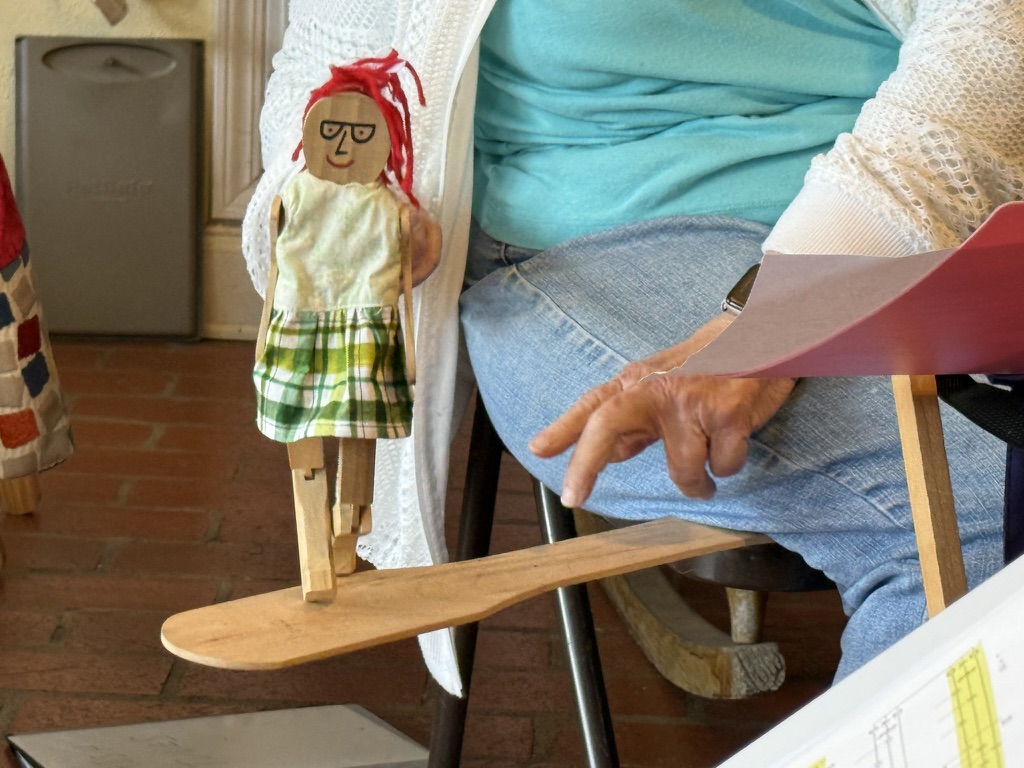
A Note about Limberjacks
A Limberjack is an Appalachian musical rhythm instrument and doll. When the flexible wooden board is struck with your hand — the board vibrates and the multi-jointed toy bounces — hopefully in rhythm with the song. This is more difficult that it would appear — the toy is held stationary with a long stick with one hand while the board bounces when your other hand hits the board. This creates a jumping motion with the toy. The board is tucked under your thigh and held securely. In our case, the doll seems to dance on the board. Practice makes perfect. Audiences love this percussive instrument, and the clacky sound and dancing doll (or dog or horse) greatly adds to the rhythmic value of the song.
About I”ll Tell Me Ma
This tune is a traditional Irish children’s game tune. It is catchy and rhythmic. The tune dates at least to the ninetheenth century when it was documented by British folklorist and pioneer in the study of children’s games, Alice Bertha Gomme. In 1894 and 1898 she published The Traditional Games of England, Scotland and Ireland (Volumes 1 and 2) containing descriptions of some 800 children’s games. She did this with the help of seventy-six correspondents. Lady Gomme also authored volumes on children’s singing games.
An illustration from Children’s Singing Games, 1900.
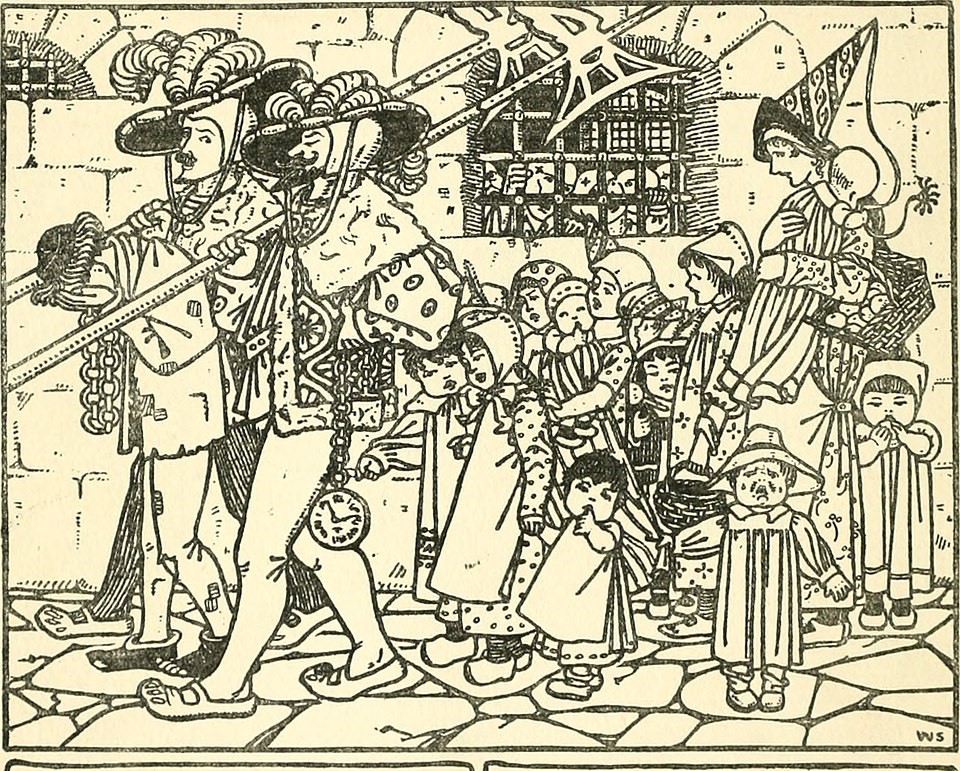
According to Wikipedia, “I’ll Tell Me Ma” is a children’s game tune. “The song accompanies a children’s game. A ring is formed by the children joining hands, one player standing in the centre. When asked, “Please tell me who they be,” the girl in the middle gives the name or initials of a boy in the ring (or vice versa). The ring then sings the rest of the words, and the boy who was named goes into the centre” (Reference, https://en.wikipedia.org/wiki/I%27ll_Tell_Me_Ma)
The lyrics to “I’ll Tell Me Ma” are adapted depending on the city and setting. For example, the song includes the phrase, “….the belle of Belfast City.” These words are sometimes changed to “…the belle of Dublin City.” And, actually this particular tune is sung all over the British Isles — not just Ireland.
The song has been incorporated into the reperatorie of many contemporary Irish singers. For example, Van Morrison and The Chieftains recorded a popular version of the song in 1988. A YouTube recording of the Young Dubliners singing the tune is a good example of contemporary Irish musicians singing this tune. (Reference: https://www.youtube.com/watch?v=ymFM0Idsv3o)
Books of Irish Music on the Mountain Dulcimer
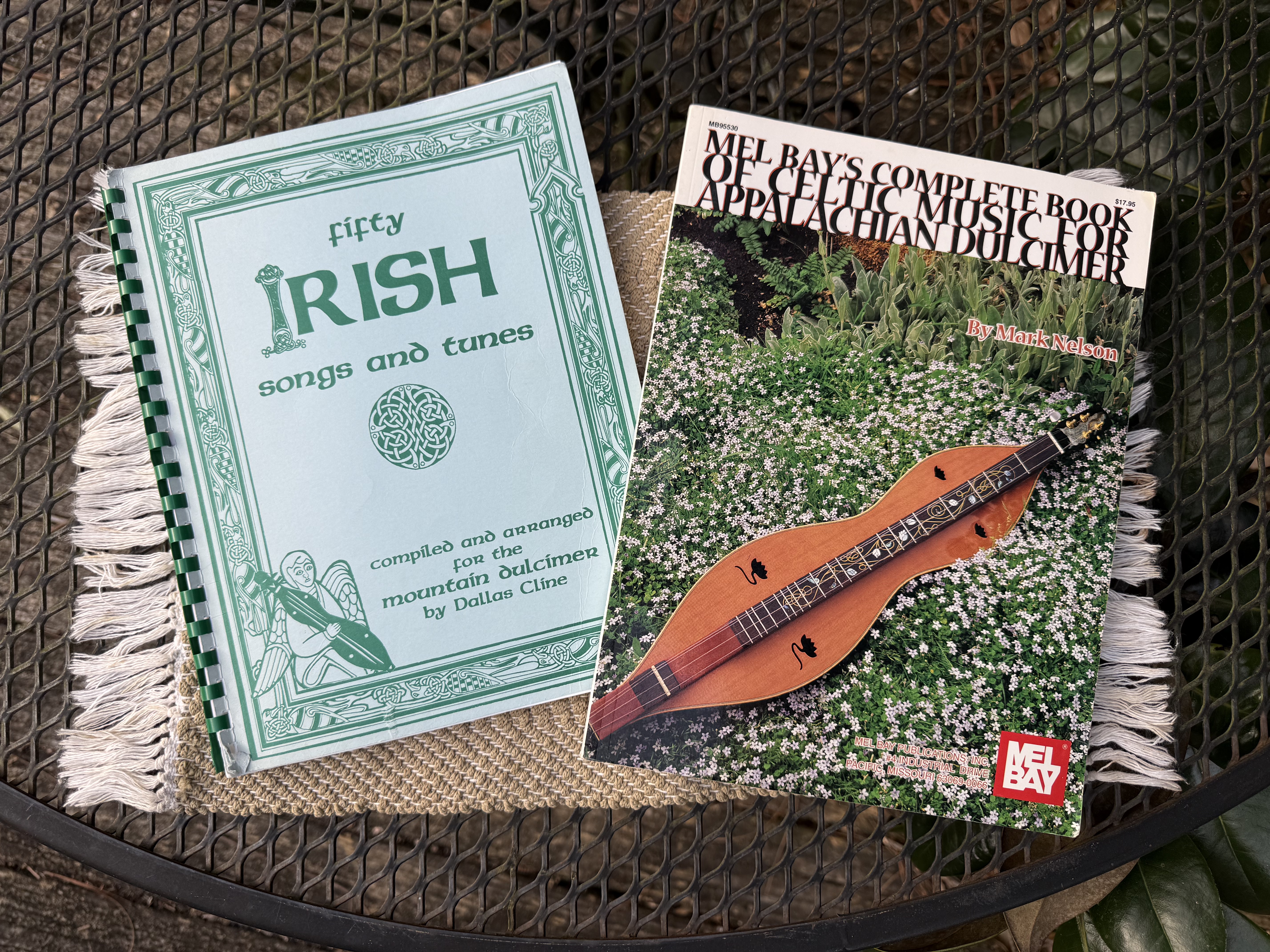
If you are interesting in learning Irish music to play on the dulcimer, countless tablature books of traditional Irish music are available. (I’m not partial, I just have too many Irish tune books authored by dulcimer players to name them all.) However, my book collection include two books which are unique. Of course, Dallas Cline’s book is the first one. In addition, I enjoy a book authored by Mark Nelson and published by Mel Bay Publishers in 1995. This book is a complitation of 109 Irish tunes. The tablature is straightfword — although the print is small and difficult to read — and Mark gives playable arrangements of all the tunes. Many unfamiliar tunes fill the book; it is a great one to increase your reperatorie of Irish music with dulcimer tablature included for all songs. Most of the tunes are in DAD or DGD. I found several songs in less common tunings such as CGC, CGBb and DAC.
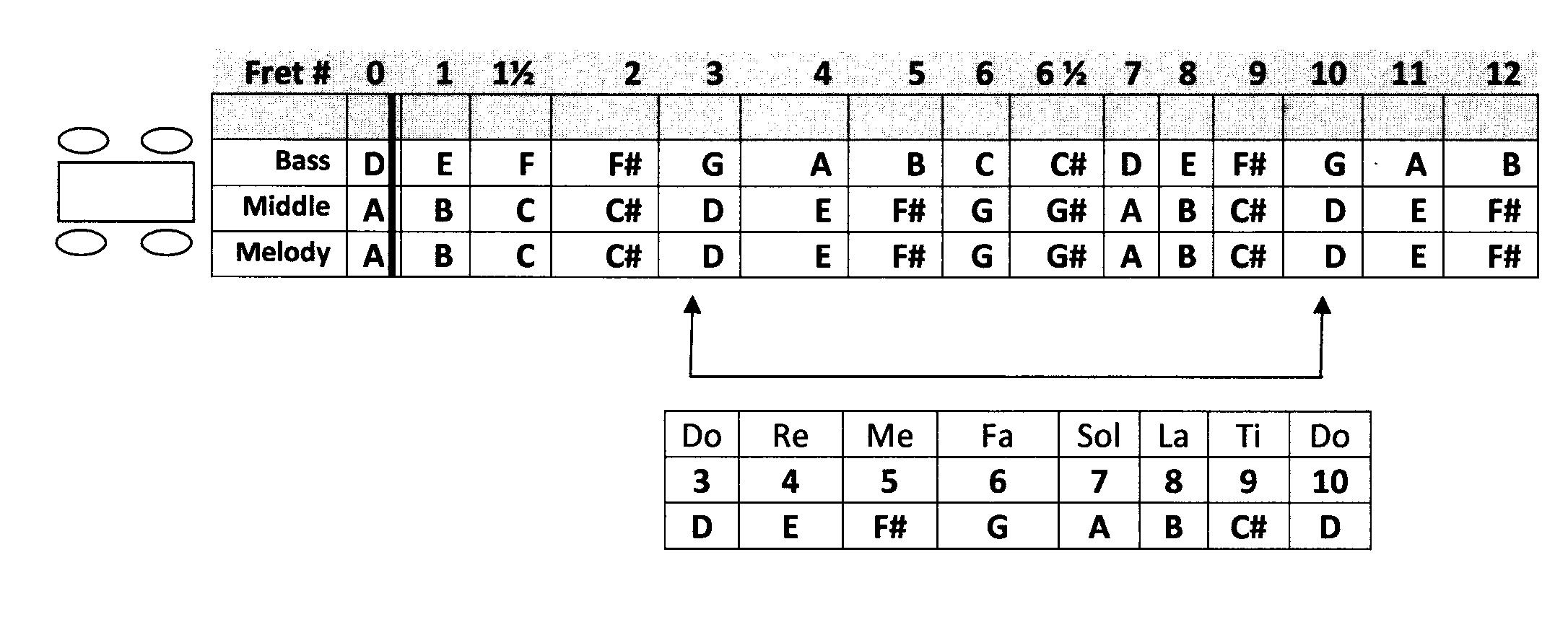
DAD Tuning — melodic vs DAA Tuning — dronal
Since Dallas Cline’s version of “I’ll Tell Me Ma” was tabbed out in the DAA tuning, I skipped playing it for many years. Most of the dulcimer players in my part of the world play in the DAD tuning. However, recently I revisited the tune since I enjoy it so much.
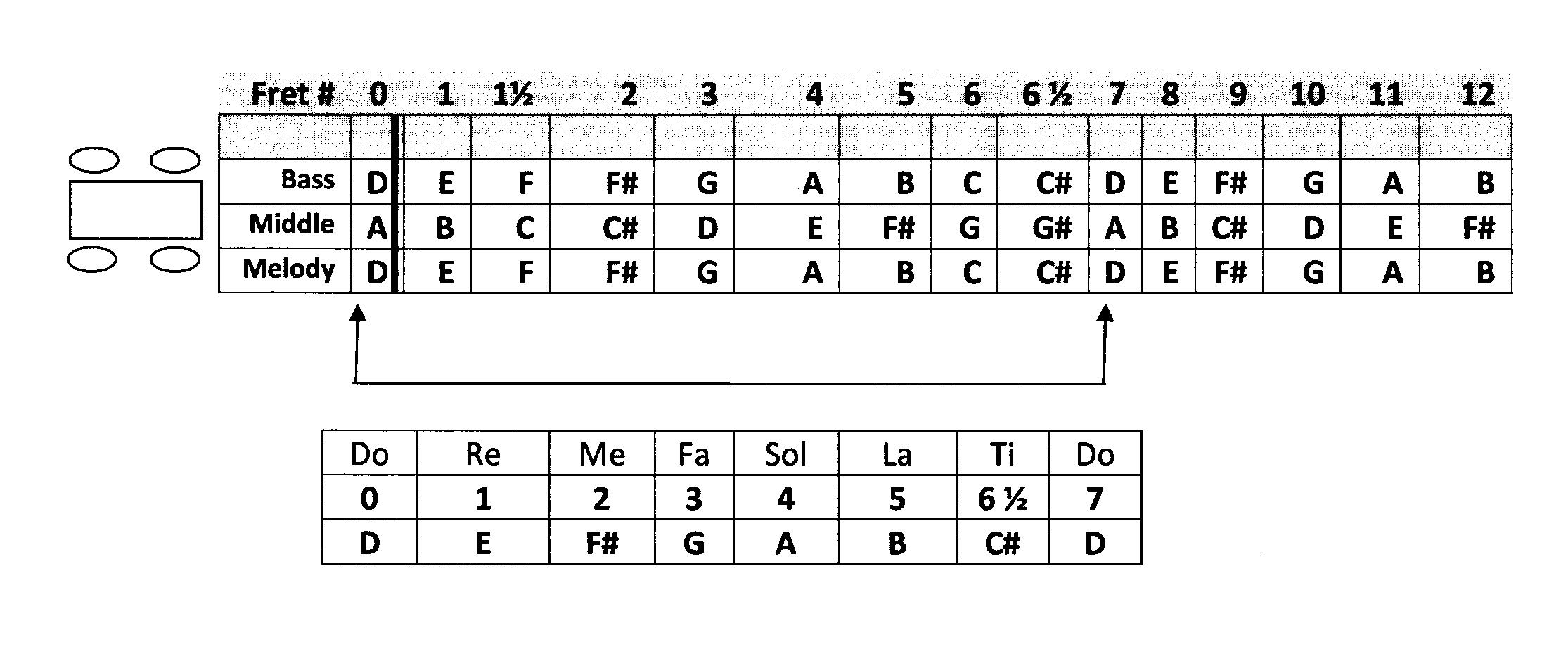
With more playing experience, I now realize that I can play the tune in DAD tuning using Dallas Cline’s DAA tablature. The trick is to play the song on the middle string. in DAA tuning, the key note (“D” note) is the 3rd fret and songs revolved around the 3rd fret. Since the middle string in DAD tuning is an “A” string, anything in DAA tuning on the melody string (also an “A” string) can just be moved over to the middle string — same frets. With this style of playing the drones sound out — there isn’t much flexibility for harmonizing. While some folks find all the drones to be annoying; I hear the melody ring through the dones and am not bothered by the drones.
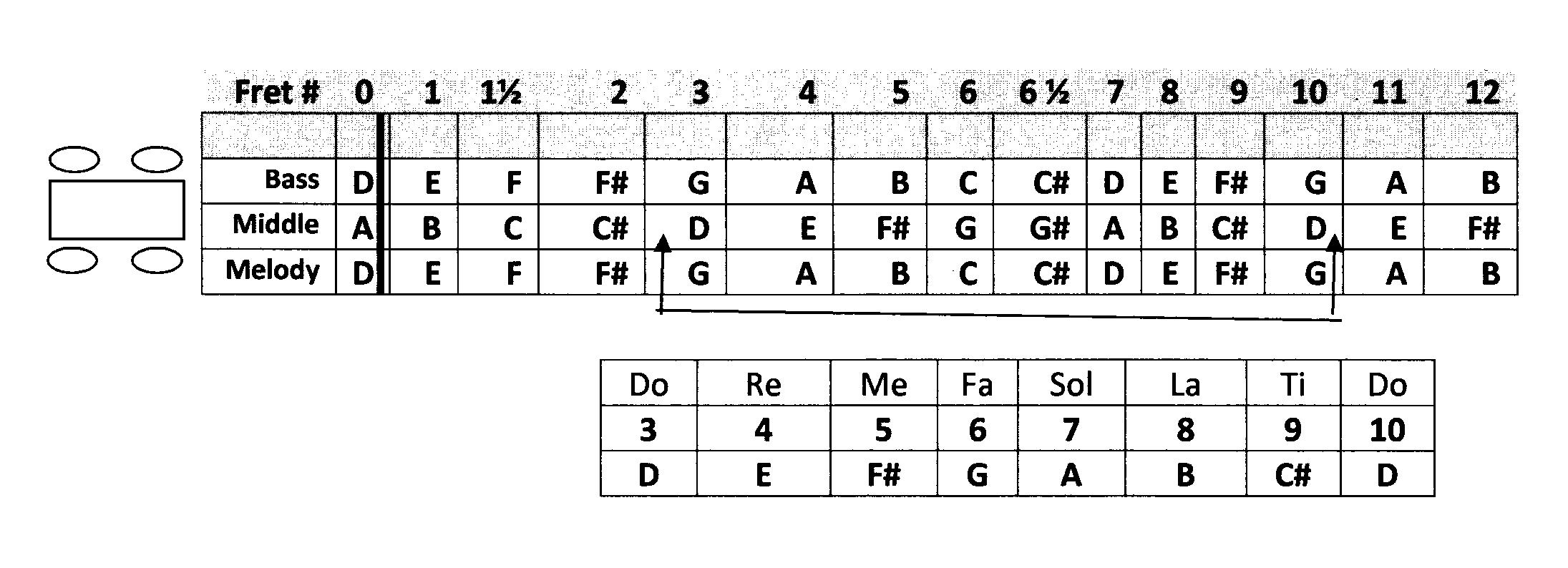
Another option is to re-tab the song to play in the DAD tuning. This means moving the song’s melody and tablature down the fretboard so the key note (“D” note) is the zero fret. In this case, some of the melody notes need to be played on either the middle or bass string, since the melody goes lower than the “D.” An advantage of the DAD tuning is that there are more opportunities for harmonizing and adding chords to the melody. This makes for a pleasing arrangement.
Dotted Quarter Notes — “Skipping” rhythm
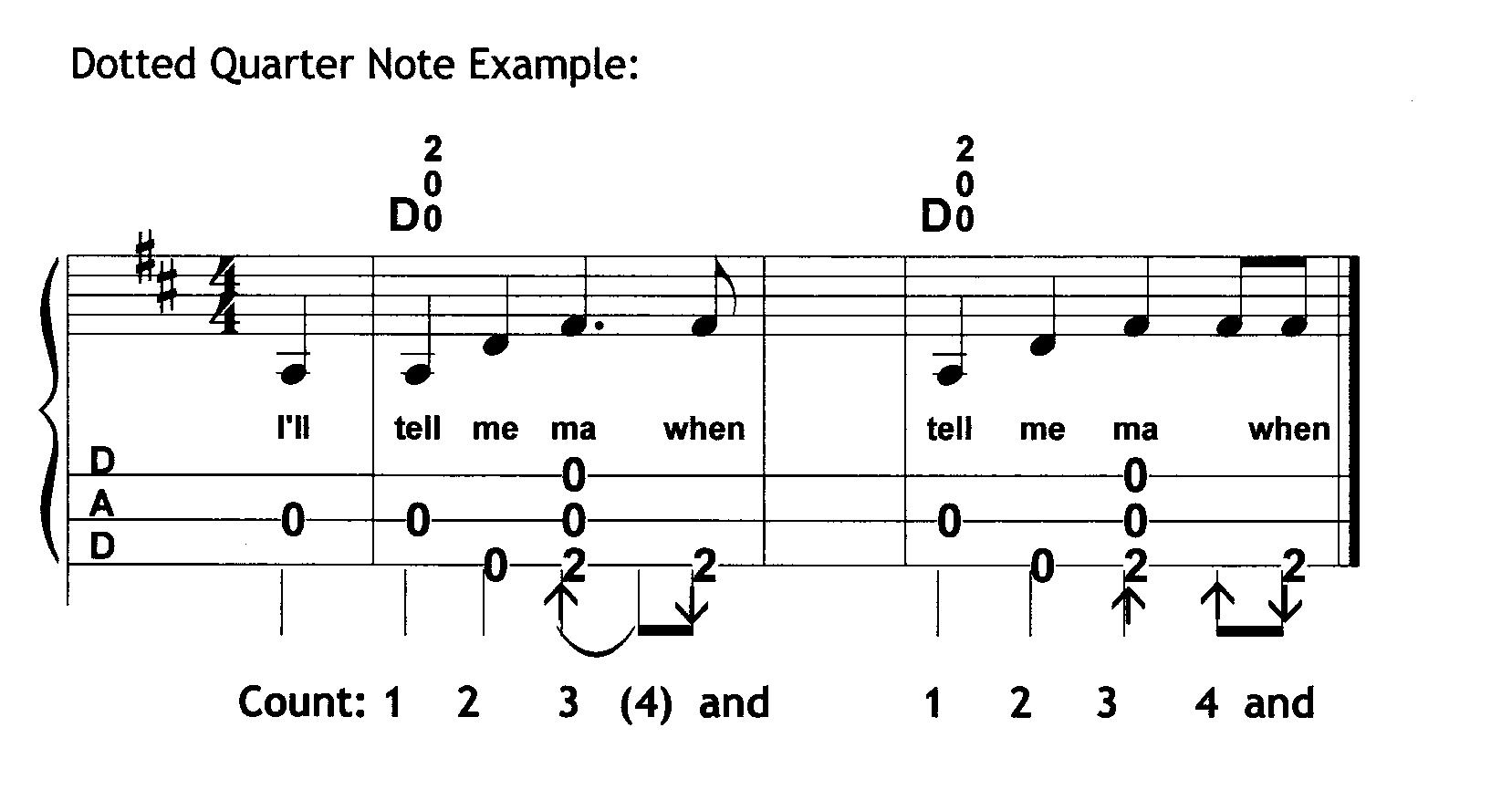
The first two lines of this song include several dotted quarter notes. It gives the tune a syncopated feel and adds rhythmic texture to the song. Let’s learn how to play dotted quarter notes.
The dot after the note increases the beat value by 50 %. So a quarter note becomes a quarter note plus an eighth note. To play this note: either “air strum” the downbeat and “dot” and play only the second eighth note. Alternatively, at least minimize the strum on the downbeat. It’s as if you are floating over the downbeat — while holding the fret down — and playing only the second half of the beat. It’s as if you are skipping — which is what this melody may intend.
Catchy and Rhythmic Tune
In any case, this is a very catchy tune. Keep up the rhythm going while you are playing. You can see the rhythmic emphasis included by the “Young Dubliner’s” in their YouTube version.
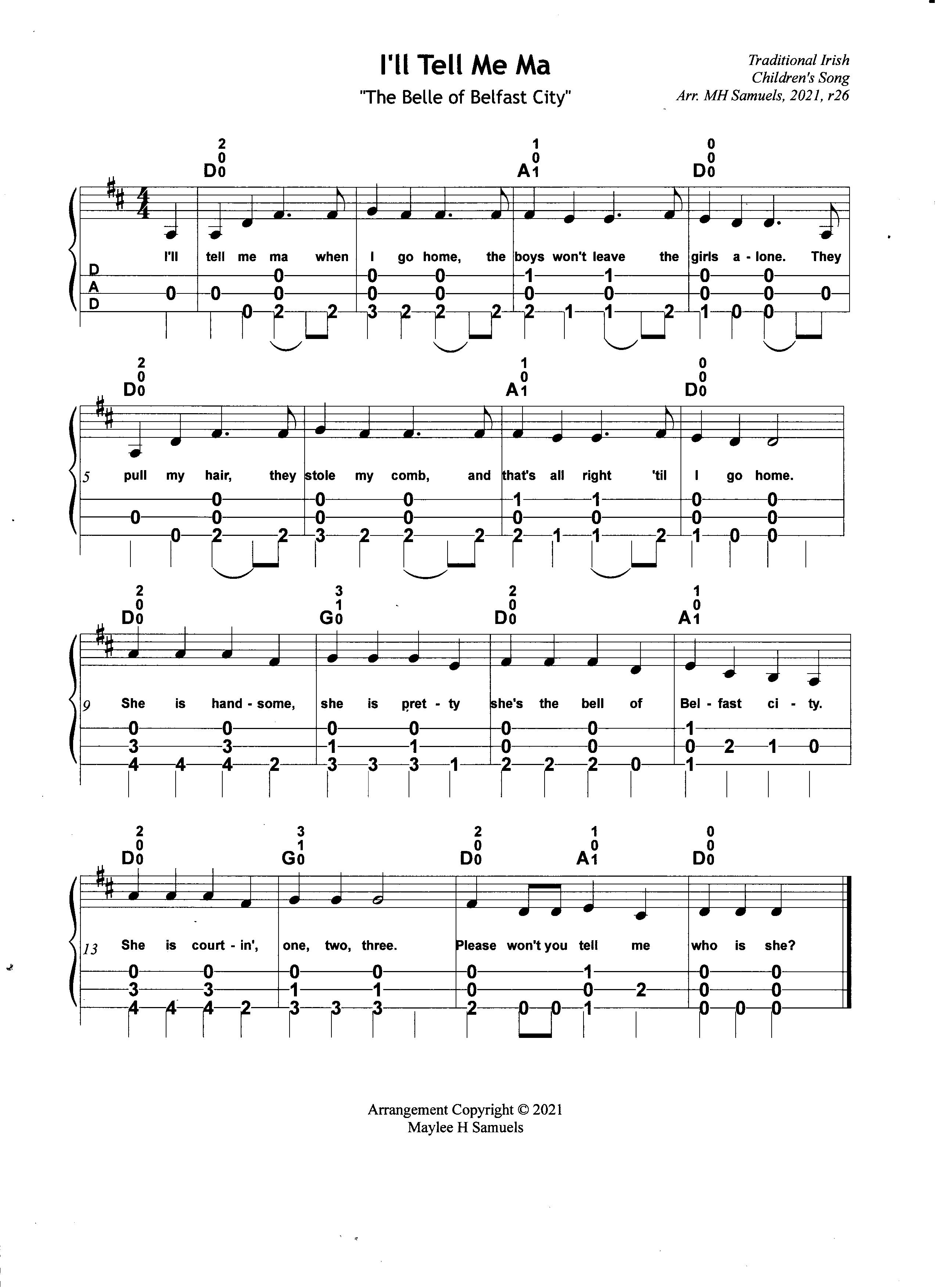
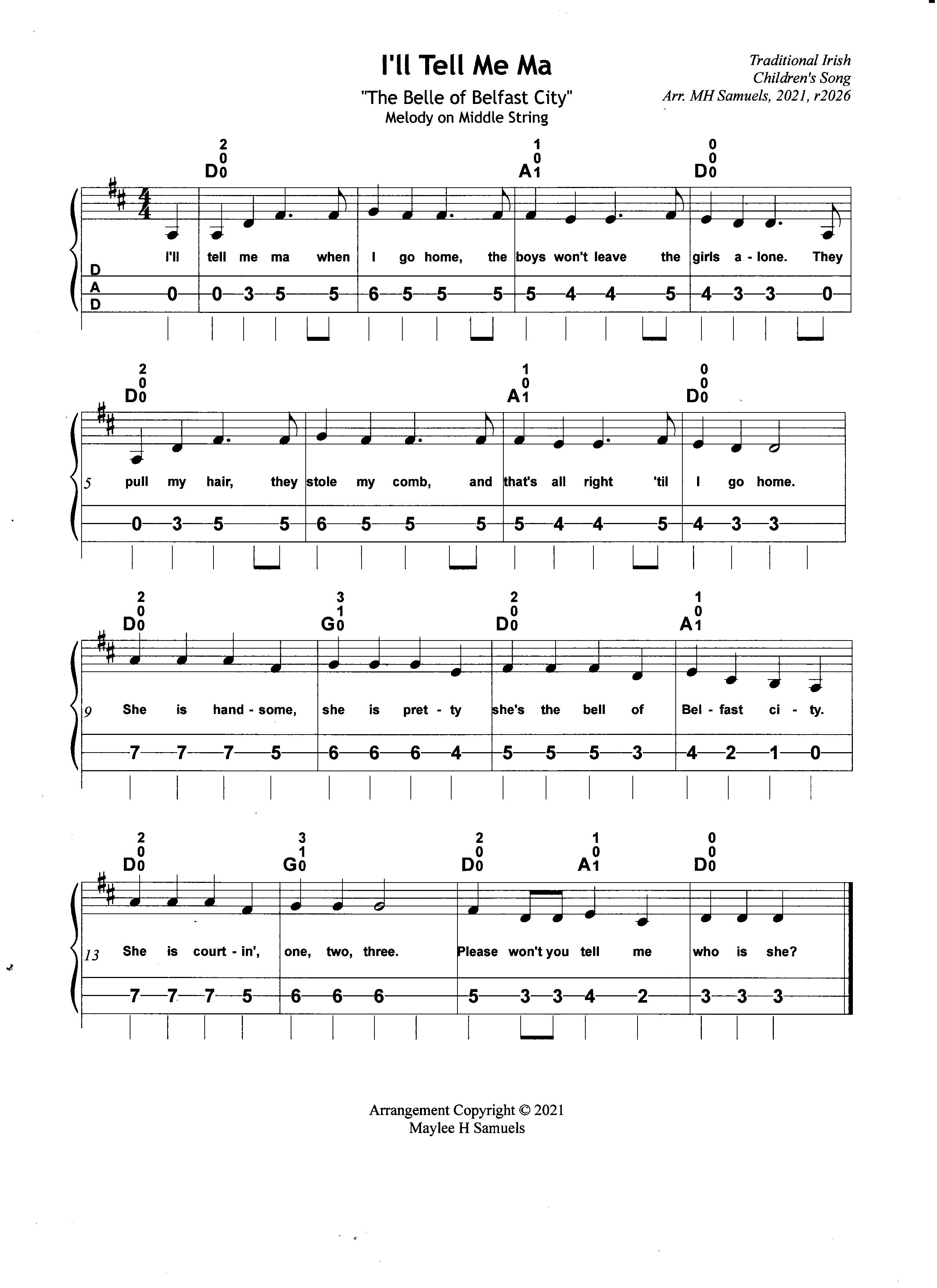
I have attached two tablature versions for DAD tuning — one with the melody on the melody string and the other with the middle string. And, the chords for the song are written out above the standard notation. This gives the opportunity for a person to add a bass rhythm and beat playing the chords.
And don’t forget the value of the limberjack dancing doll. These rhythm instruments really add to the interest in the song and gig.
Whether you are playing in DAD tuning — melody or middle string — enjoy this tune for St. Patrick’s Day.
Here are Jpeg files of the tune, “I’ll Tell Me Ma,” in DAD tunng followed by PDF files. You are welcome to print out and share the tablature locally with dulcimer playing friends. I just ask that you don’t upload the song to public internet sites or publish it.
Enjoy.
 Dulcimer Jambalaya
I discovered this tune from your email. It’s cute and kind of fun to play.
My question is what does your Copyright really mean? As “The Session” shows (https://thesession.org/tunes/2434) that: The tune has 10 other names There are currently 52 recordings and, It is in 664 tune books.
Your timing in 4/4 is certainly visually more accessible to more dulcimer players than the original 2/4 timing but it is still musically, the same. The only difference I can see is that you’ve chose to use an “A” chord vs the “A7” from the older versions.
Therefore, how do I respect your copyright vs. taking the original and putting it into TablEdit for myself? OR might the a more proper label be TablEdited by Maylee H Samuels – 2021?
Thanks for your efforts.
Easel Roberts
>
LikeLike
Hello, That’s a good question and one which I have pondered over the years. Here’s my take on the subject. Any song in the public domain can be used by a person without asking permission. So, you can use any of the Session songs without giving me credit. However, I rarely use a tune straight out of the Sessions. I’ll take 5 or 6 tune variations, compare and contrast and then combine parts of the tunes. Or i’ll listen to YouTube versions and try to see what is predominant. Or, I’ll omit some of the notes (these tunes were probably intended for fidders or pennywhistles and have too many passing notes for dulcimer players to tackle). Or, I’ll change keys and chords (A vs A7). And, certainly the dulcimer tab arrangement is something I come up on my own — I don’t copy other folks tab and if I’m arranging something for this blog, I don’t even look at other folks tablature. If it identical to someone elses’s– then it is a coincidence. So, I just ask that you don’t sit at a computer with my arrangement on your desk and copy it literally word for word into another software arrangement. Or, I request that you don’t publish my tablature or upload them to the internet (some clubs have restricted/private sites — that’s fine.) So, just change up the arrangement, chords, tablature harmony or something to make it your own. If I do use someone else’s arrangement on this blog — I email and get permission first. I use recipes as an example. You cannot copyright an ingredient list; but your can copyright the instructions. So, regarding the Sessions or other public domain songs, please don’t credit me. I didn’t write the song!! But if you use my identical lyrics (often with misspellings) or my dulcimer tab (sometimes with mistakes) — then it is courteous to ask me first. Hope this helps. And, the purpose of my blog is to have folks enjoy my tablature — so I am pleased to hear that folks have downloaded, printed and played my tunes.
LikeLike