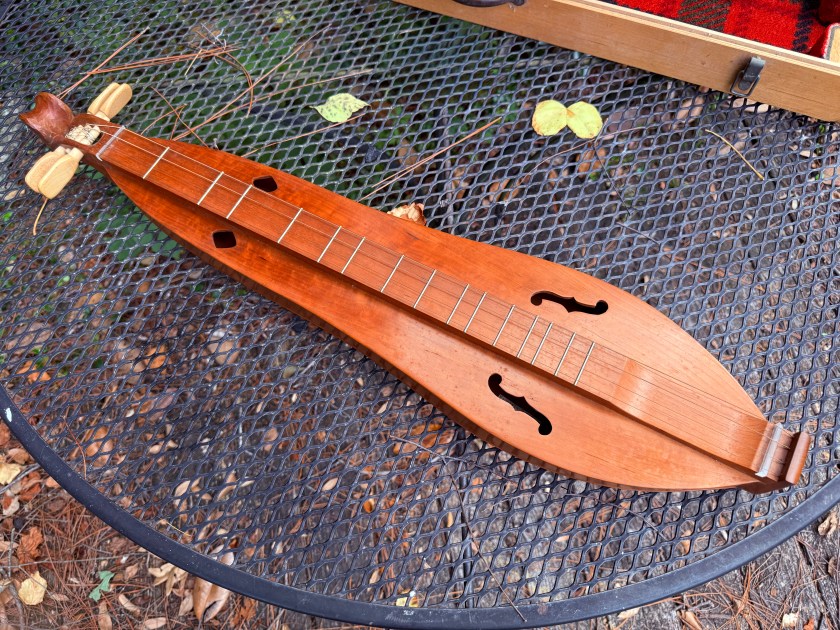
Today I’m welcoming a new dulcimer into my extended instrument family. It is a rescue dulcimer — saved from being discarded on the shelves of a Goodwill store. Yes, this solid, wild cherry dulcimer has wooden tuning pegs which won’t hold a pitch. It doesn’t have a 6-1/2 fret and has a very wide fretboard configured only for four-equidistant strumming. It was deamed unusable by its current steward. Could we do something with this “fix’r-upper” dulcimer?” Otherwise, it was going to Goodwill. So, I brought it home. After researching the dulcimer’s luthier on the internet, I began to recognize that this was a true vintage dulcimer from a prolific dulcimer builder in the 1970s. It would be a shame to ruin the value by changing out the wooden tuning pegs and adding a 6-1/2 fret. I put on new strings — slightly lighter in gauge — and pushed the tuning pegs in securely. To my amazment, the four strings held their pitches. I was delighted and now I have a dulcimer with a harp-like sound. By far, the most memorable tune which I’ve ever heard played on the dulcimer is a jazz waltz, “Saturday Night in St. Andrews,” composed and played by Barb Treux on an electric dulcimer. Barb Treux used equidistant strings tuned to CGCD to create a dreamy, ethereal sound on the dulcimer. Finally, I have just the dulcimer to play the tune. Barb generously shared the tab.
One person’s trash is another person’s treasure
I truly believe the adage — “One person’s trash is another person’s treasure.” Without the 6-1/2 fret, this dulcimer has little practical use for a traditional dulcimer player tuned to DAD — either a beginner player or experienced player. And who plays with four-equidistant strings these days? Although the wooden tuning pegs held the pitch, they were exceedingly difficult to tune.
However, not everyone plays in DAD, and some folks flourish with four-equidistant strings. For example, Barb Treux, living in Maine these days, is one such person.
Barb Treux’s Jazz Waltz — “Saturday Night in St. Andrews”
Listening to Barbara Treux play “Saturday Night in St. Andrews” in concert is one of my most memorable dulcimer experiences. Who would ever know that a dulcimer could have such dissonant yet dreamy tones? And, the sustain effects of the electric dulcimer made the sounds reverbrate across the concert hall. I new that this is what I wanted to do on the dulcimer. The setting was one of those Appalachain State Dulcimer Workshops in Boone, North Carolina, in about 1998. I went there as a very new dulcimer player — and was “wowed” by all the accomplished dulcimer performers in the evening concerts and the versatility of the mountain dulcimer.
Barbara Treux is a multi-instrument player now residing in Maine. She is just as comfortable playing baritone ukelele and guitar as mountain dulcimer. In fact, the first instrument she learned as a child was the ukelele given to her by her banjo-playing father– as she couldn’t reach the strings on the frets of a guitar. Later in high school she progressed to a guitar! Barb has also studied piano and jazz instruments — making her a versatile musician.
Sometime in the 1960s, Barb listened to Richard Farina play the dulcimer on an album (remember those?) and remarked that she had to have one of these instruments. That led to a career playing and performing the mountain dulcimer, along with her other instruments. At some point, Barb added an electric dulcimer to her music inventory — complete with a string dampener and sustain petal. (@Dulcimoon Podcast #52, 2026 on YouTube https://dulcimoon.com/) Once Barb acquired a dulcimer, she delved into a five year or so period learning what was going on with the dulcimer fretboard and — studing music history, music theory, jazz piano, jazz guitar and writing down what she was doing. She emerged with a comprehensive knowledge of music theory, modes, etc.
Barb approaches the dulcimer differently from traditional mountain dulcimer players. Her dulcimer has a longer fretboard — and the CGC tuning results in a more pleasing sound that DAD tuning. And, this dulcimer doesn’t have a 6-1/2 fret. (Interestingly, Barb is still playing the same dulcimer that she stared out playing in the 1960s.) Barb is used to a fingerpicked guitar, and likes having four equidistant strings on the dulcimer. The last string is tuned to “D” note, and this “add-9” note/chord is often used in jazz musical arrangements. Barb commented that she can play most song arrangements in the CGCD tuning — with no or just a little retuning. Otherwise, Barb simply reaches for a ukelele or guitar play the music. (Reference: @Dulcimoon Podcast #52, 2026 on YouTube)
Over the years, Barb’s musical interests have grown to include improvisation, percussion instruments and playing rhythm on the dulcimer. Barb is part of several performing groups and ensembles which include other musical instruments in additonal to dulcimer. This vast experience shows in the large range of musical genes which Barb enjoys. The mountain dulcimer fits into the ensembles, but in novel and interesting ways.
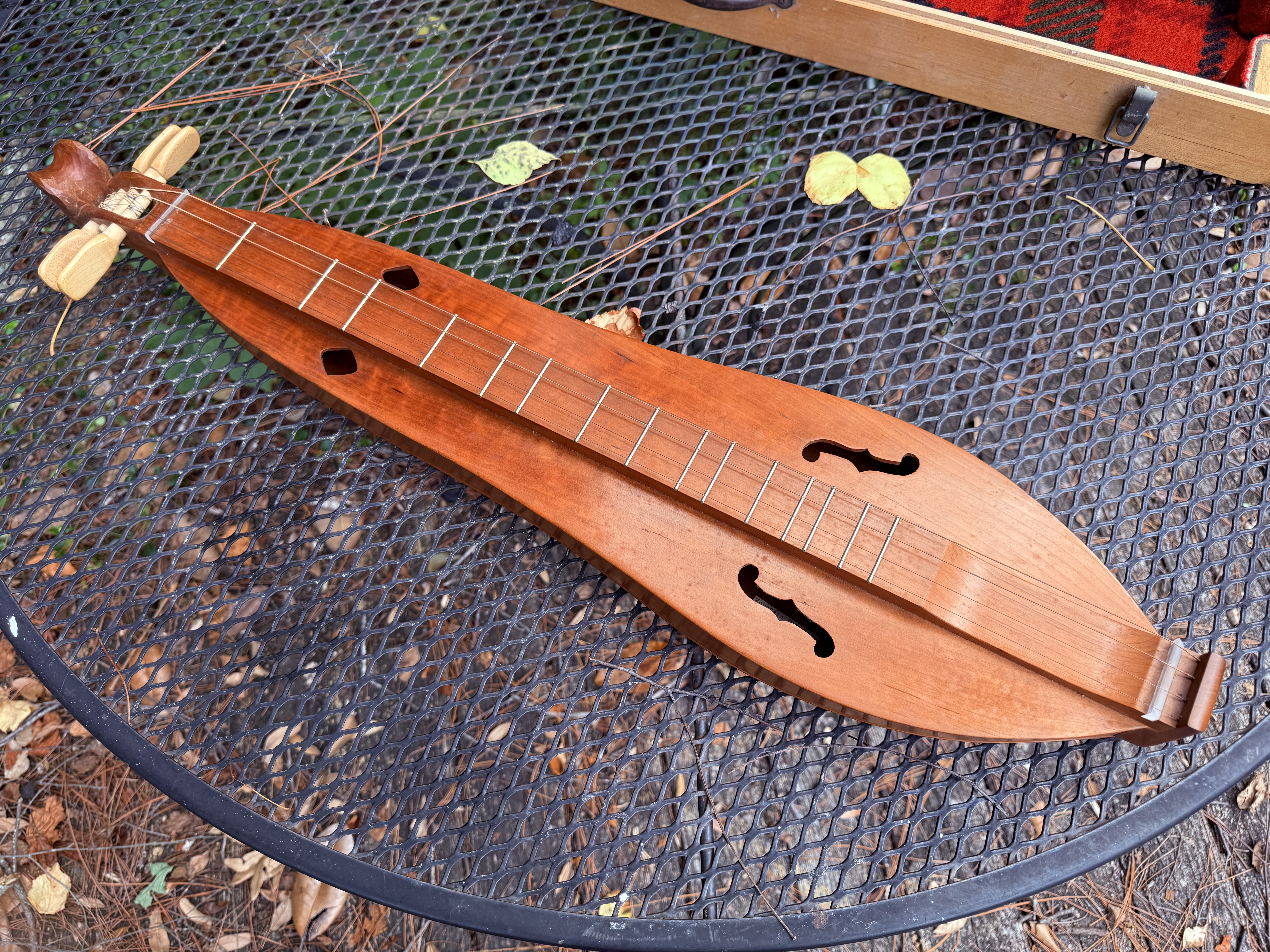
Rescue Dulcimer – Wild Cherry Dulcimer
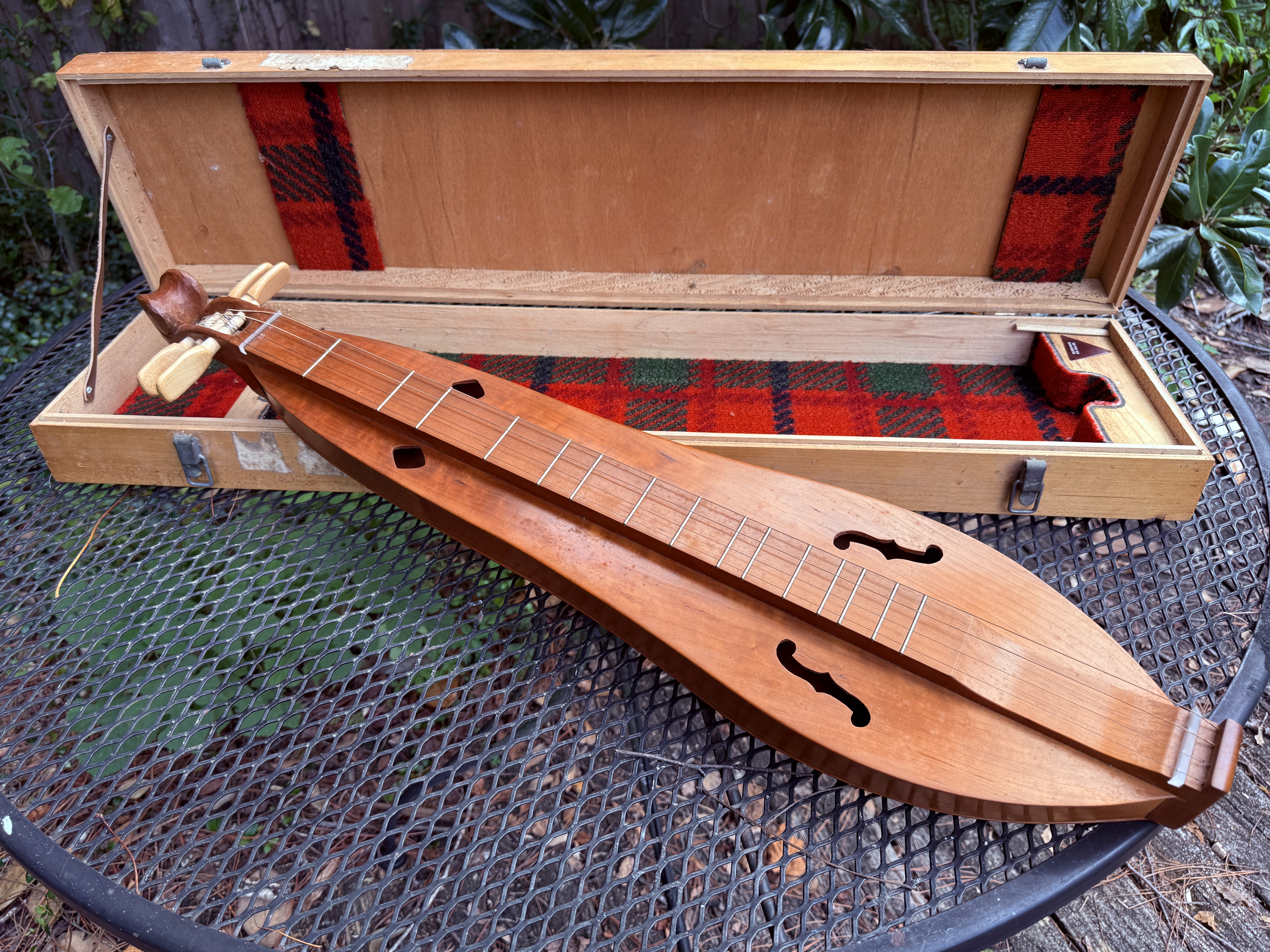
For several years now, I have vowed never to purchase/add any more dulcimers to my collection. However, this dulcimer literally fell into my lap. As I can relate, the long-time owner passed away and the remaining family members needed a new home for the dulcimer — giving it to a steward to care for it. So, the “fix’r-upper” dulcimer was going to be donated to Goodwill if someone in our local community didn’t want it. After researching the situation and discovering that this was a vintage dulcimer, I decided that it would be a disservice to change the wooden pegs to geared tuning pegs and add a 6-1/2 fret. How could I allow it to be donated it to Goodwill. I brought it home.
Luthier — John Maxwell
The luthier, John Maxwell, had carefully typed a small tag which was glued inside a sound hole: “Mountain Dulcimer, Hand Made by John Maxwell, Cookeville, Tenn. #605, 1973.” In my opinion, this qualifies as a vintage dulcimer. And, this is a relatively early in this dulcimer builder’s career.
According to A.I., John L. Maxwell (1922–1981) is an Appalachian mountain dulcimer builder from Cookeville, Tennessee, who handcrafted between 2,300 and 3,000 dulcimers from the mid-1960s until his death in 1981. In addition to dulcimers, Maxwell built all kinds of furniture in his large workshops. Born in Overton County, Tennessee, Maxwell worked as a general contractor and furniture maker in Cookeville before entering instrument building. He discovered the mountain dulcimer at the Southern Highland Guild show in Asheville, North Carolina, in l964. Later, he bought a kit from the famous dulcimer luthier, Homer Ledford, then began building and selling dulcimers. Maxwell modified and changed the shape to his own unique tear drop design. He sold his dulcimers, possibly intended for the tourist trade, at the Upper Cumberland Craft Center. The wooden carrying case included several noters, indicating that perhaps this was the suggested playing style in a 1-5-5 (either CGG or DAA) tuning. Maxwell’s dulcimers were popular during this period, being displayed at Gracelands and the Grand Ol’ Opry, as well as being presented to then-president Richard Nixon. So, Elvis Presley owned one of these dulcimers!
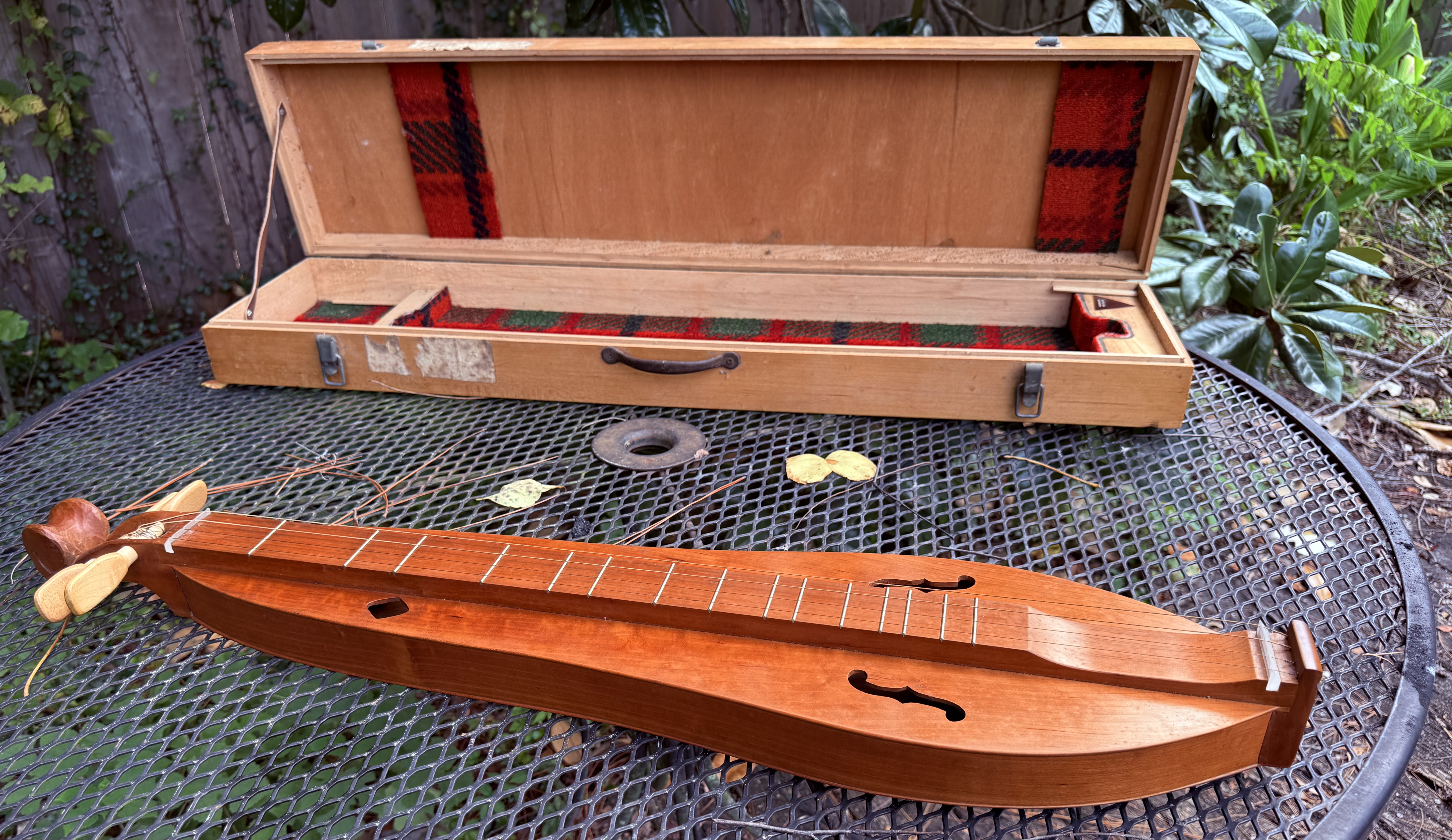
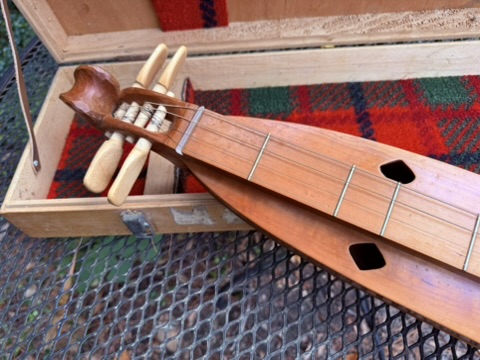
When I opened the wooden case, it looked like this dulcimer had never been touched. The dulcimer was in perfect condition. The wood is solid wild cherry — the tuning pegs are paddle-shaped beech. The scroll head is left partially uncarved — serving as a rustic trademark of this luthier. The fretboard is hollowed out underneath (not visible to the player). The tail piece has the very traditional form used by many Kentucky-style builders such as Homer Ledford and Bob Mize.
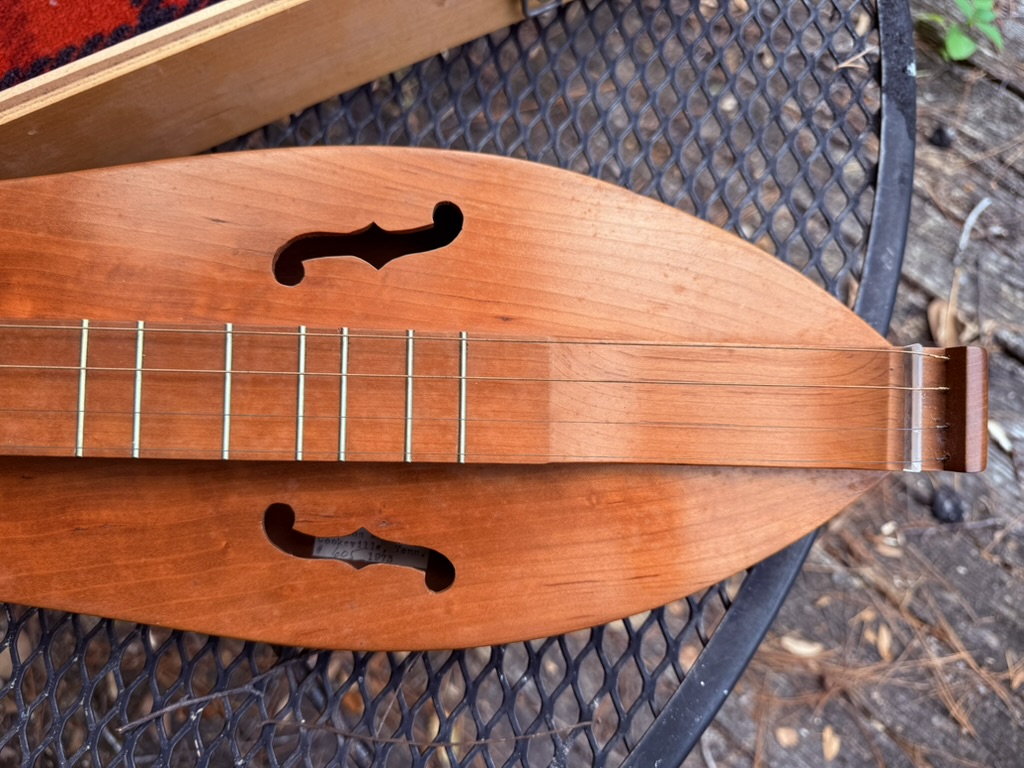
The vibrating length of the fretboard is 26.5″. (Quite short for those years!) When I received the dulcimer, the strings on the bass and middle string were heavy wound strings and also very, very old and rusty. The strings on the double melody strings were also very heavy.
I replaced the strings with a set similar to my Blue Lion dulcimer which also has a 26.5″ vibrating length. This dulcimer uses ball end strings. I like this pin head — the strings can’t slide around as you change the strings!
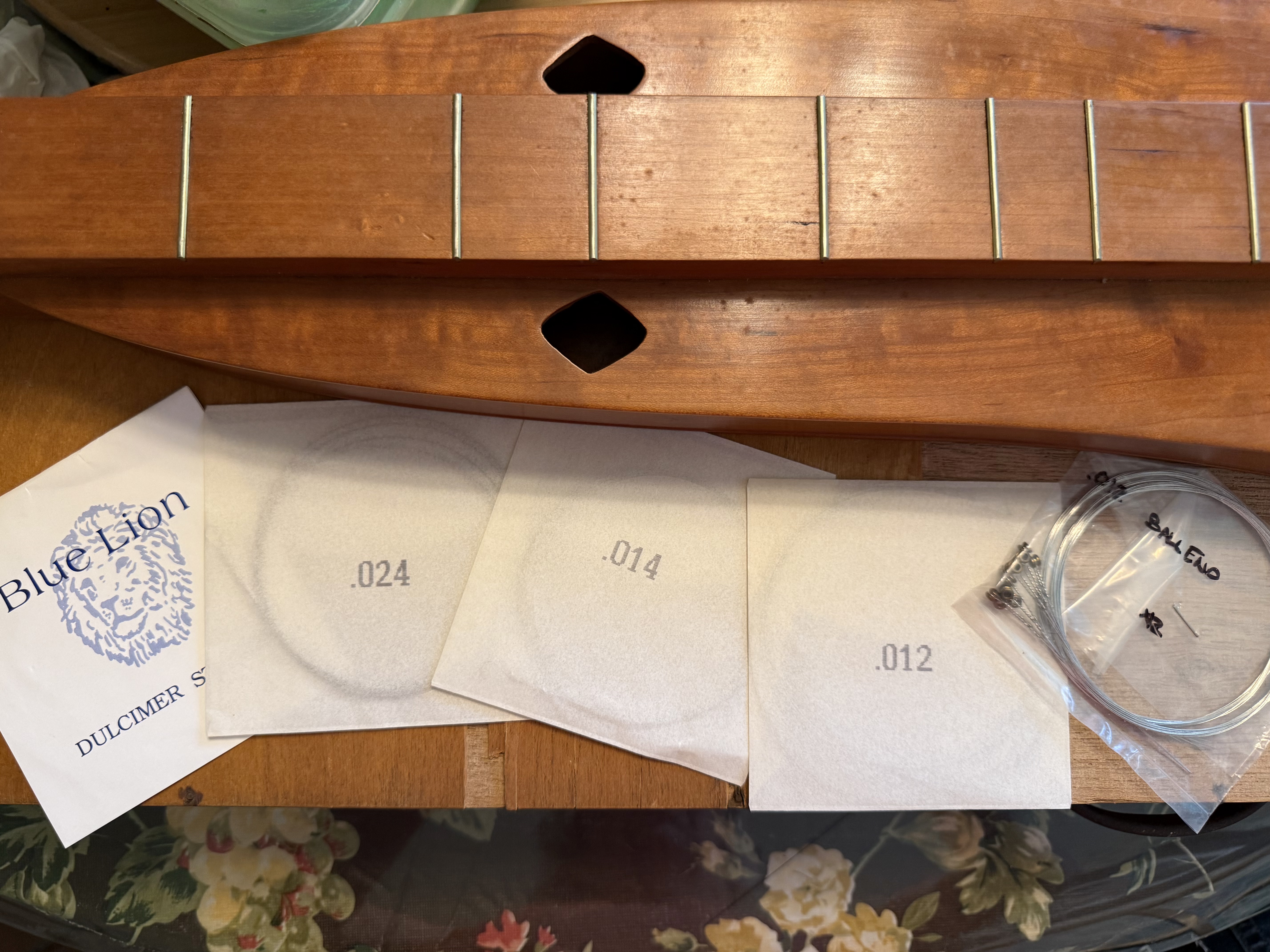
Four-Equidistant String Dulcimer tuned to CGC – add D.
Because of the very wide fretboard on this dulcimer, this configuration is perfect for playing four-equidistant strings. (Plus, there are not slots to change to 3-string set-up.) I tuned the dulcimer to CGC-D to play Barb’s jazz waltz. The strings are tight enough at these pitches — the tuning pegs held their pitches — but only a tiny turn of the tuning peg changed the pitch. I decided that I will probably continue to play this dulcimer at these pitches. That will essentially mean playing this dulcimer as a solo one — as there aren’t many/any folks in our area playing in this jazz CGC-add D tuning (sort of an Ionian mode tuning). Of course, I can always tune to CGC-add C (Mixolydian mode) or CAC-add C (reverse ionian). or DAD-D (Mixolydian mode). In any event, retuning this dulcimer is a testiment to patience.
For those keeping score, CGC-C tuning is similar to a DAD tuning with the strings lowered one pitch to CGC and the top string is tuned to “D”. Here is the fretboard with these notes/frets.
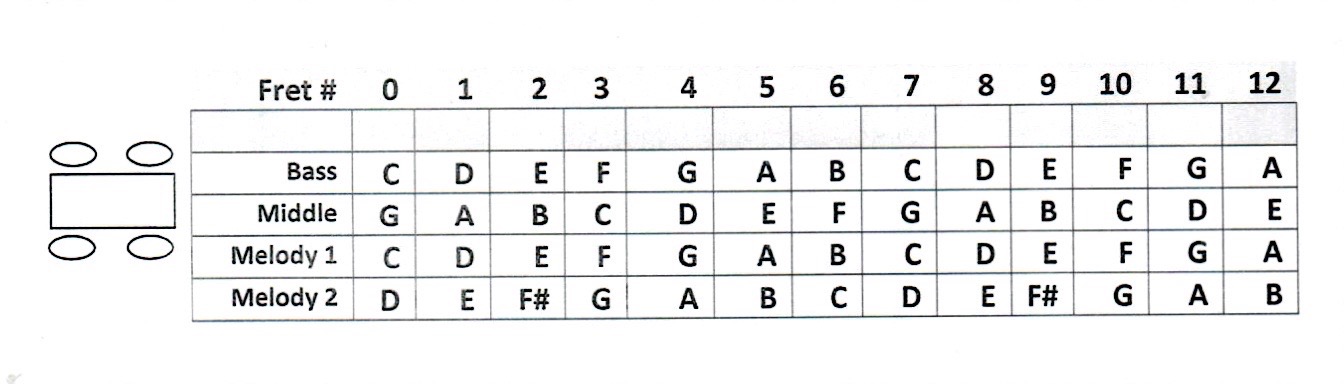
Now, let’s play Barb’s waltz. The melody flucuates from the middle to melody strings. And, several times during the piece, the melody pivots and takes on totally different tones. Strum across the strings. The melody creates surprises and interesting elements. It is just a stunning waltz!
And, what’s the verdict on my new cherry dulcimer?
My new cherry dulcimer is very quiet. It has a harp-like quality when strummed — however, I actually like the tone best when fingerpicked. As I said, this is not a loud dulcimer — the waltz comes across as a quiet song — not the ethereal song as wehn played the electric dulcimer.
However, it is rewarding to finally play the waltz — after 38 years!
Now, I can play one song in this new tuning — it will take quite a bit of work and figuring to play additional songs; this will be a long term project.
“Saturday Night in St. Andrews”
Barb Treux’s waltz can be found on her C.D album — “On the Button.” The album includes original compositions by Barbara as well as Richard Farina’s composition, “V”– a dulcimer classic and quite well known for folks in certain dulcimer orbits. What a treat! (Contact Barb on her blog about acquiring the album.)
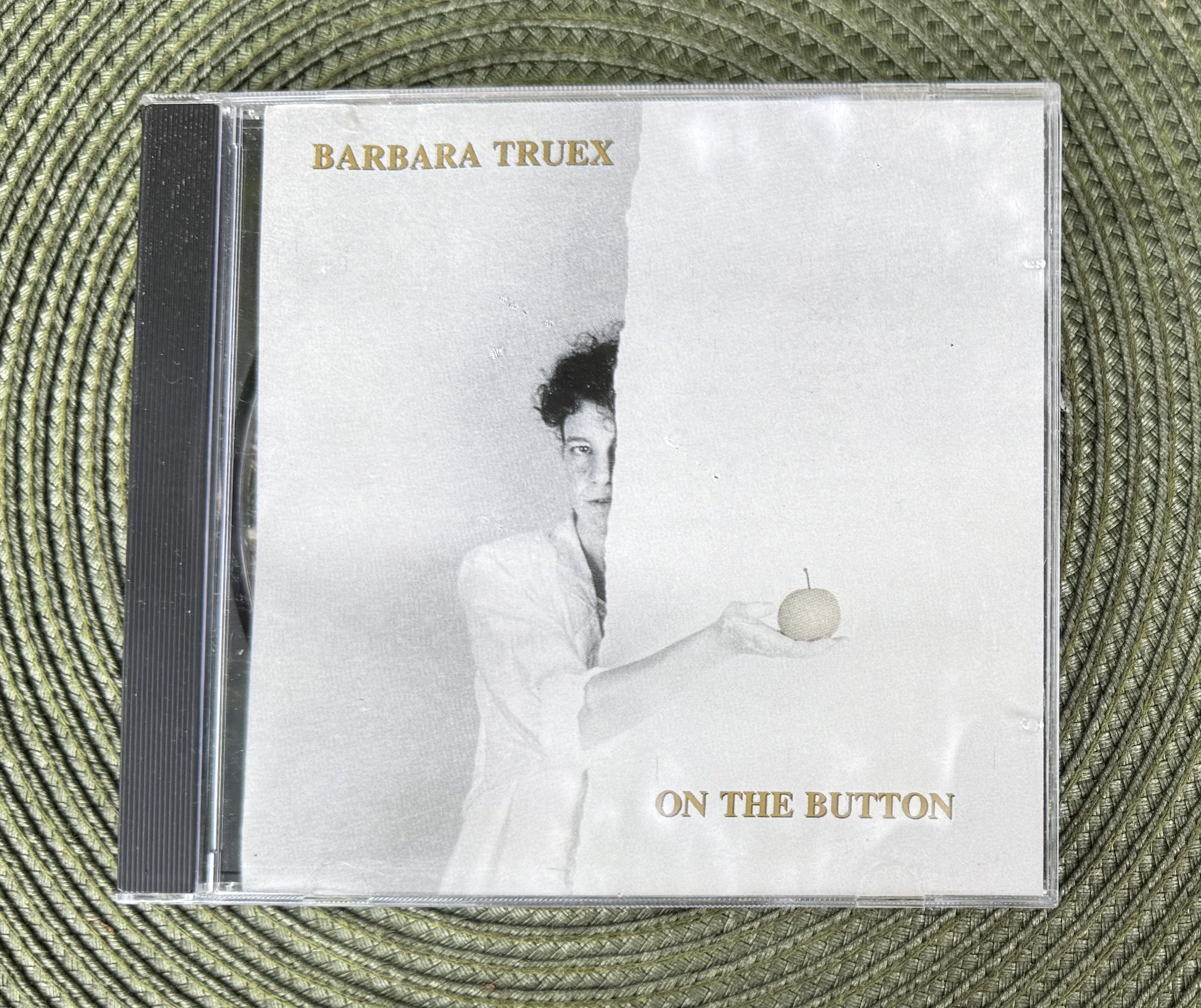
Barb has provided the tab for this original. It was so neatly written out — that I did not re-type it. Thanks for sharing it.
Enjoy this challenge tune! Let’s expand our dulcimer playing and realize that this instrument provides unlimited playing opportunities.
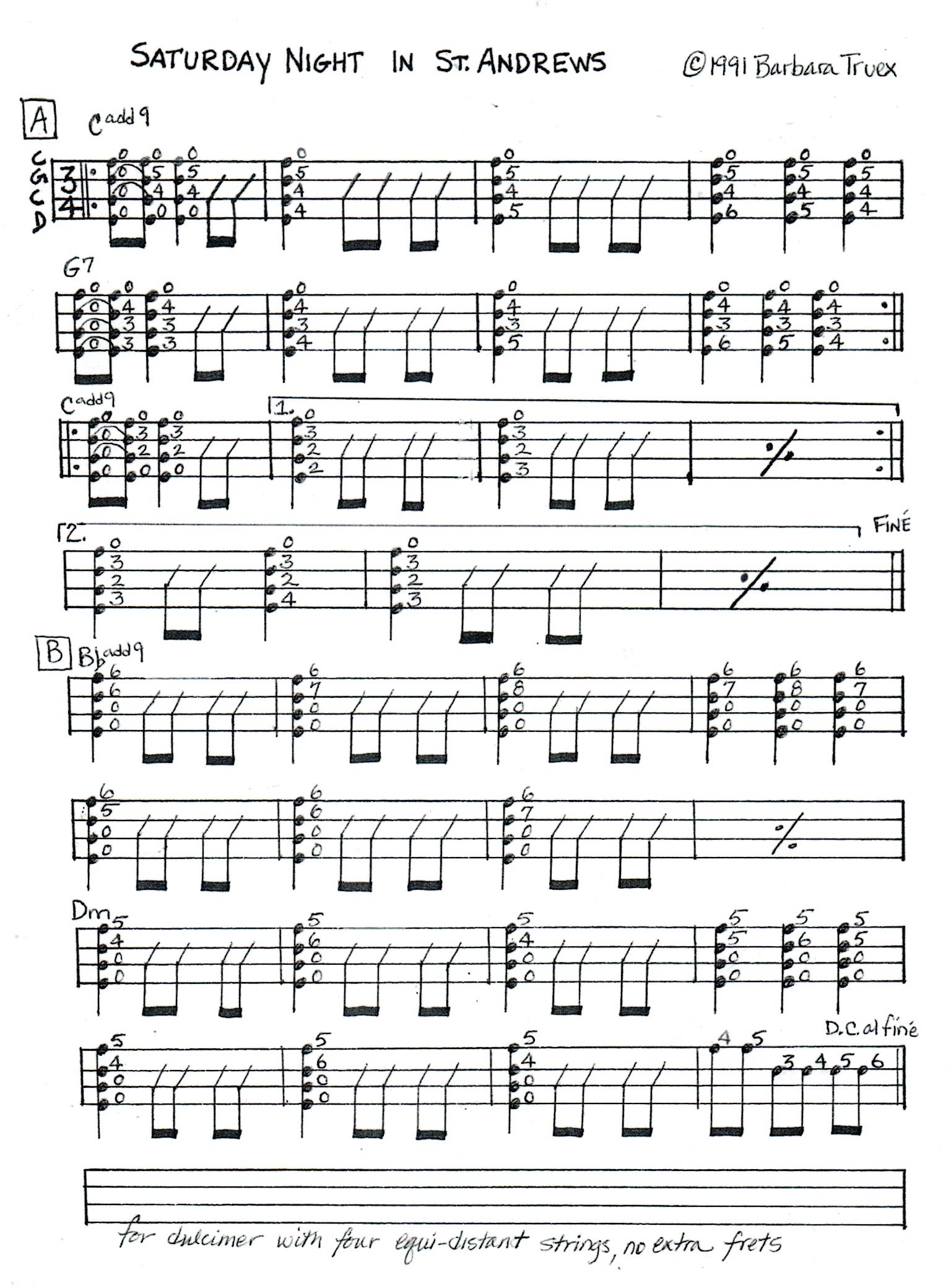
And a PDF version which can be downloaded.
And, in the future, I’ll amend my promise to myself, not to add anymore dulcimers to my collection unless they literally “fall into my lap”!!!
References:
https://barbtruexmusic.wordpress.com/
 Dulcimer Jambalaya