With the 250th anniversary of our country approaching in July, it is fitting to learn some Revolutionary War tunes on the dulcimer. However, many of these tunes were not written for the dulcimer and are not necessarily easy to play. Most of these early tunes came from the British Isles with early colonials who settled here. They were dance tunes, marches, ballads, hymns and military tunes. Although it may be a daunting task to play some of them on the dulcimer, we can try. Here’s a patriotic Revolutionary War tune which everyone learned when growing up, “Yankee Doodle.”
About “Yankee Doodle“
Yankee Doodle, with all those nonsense lyrics, was a very popular tune of American Continental Army soldiers. It one of the few songs from the Revolutionary War era which has survived and maintained its popularity over the years. It is, in fact, the state song of Connecticut. The tune symbolizes American patriotism.
The Story Behind Yankee Doodle and Song’s Origins
The song is often attributed to British army surgeon, Dr. Richard Schuckburgh, written around 1755 to mock the New England militia during the French and Indian War. The American colonists were being taxed more and more to pay for the war. The British thought the colonists should pay for the king’s war and the colonists didn’t like taxation without representation.
The feud came to a head in 1775. In the early morning of April 19, 700 British soldiers in bright red uniforms marched out of Boston towards Concord. The British fifers and drummers teased the colonists by playing “Yankee Doodle” as they marched along the rural route. Volunteer colonial minutemen townsfolk and farmers met them in Lexington, having been warned by Paul Revere. The British soldiers fired — immediately killing eight colonists. The British army continued on to Concord and destroyed the weapons cache — their mission. On the way back to Boston, colonial militiamen hid behind rocks and trees in positions along the route. They picked off straggling British soldiers, one by one. They also taunted the British soldiers singing strains of “Yankee Doodle” as British soldiers retreated. It was as if the Americans were singing, “How do you like us Yankee doodles and dandies, now?”
“Yankee Doodle” spread like wildfire in popularity among colonial soldiers and soon became the unofficial anthem for what became the American Continental Army. And, that incident was the beginning of the American Revolution. The song is a classic example of an insult that backfired, turning into a symbol of American independence.
“Yankee Doodle” was reportedly played by the Continental band during the British surrender at Yorktown. According to accounts, British soldiers are famously documented as to have played “The World Turned Upside Down” during the surrender. British soldiers marched out with their heads turned away from the Americans, looking only at the French to show contempt. Outraged by this snub, the Marquis de Lafayette allegedly ordered his band to play “Yankee Doodle,” forcing the British to acknowledge them.
Here is the meaning of some of the terms in the song “Yankee Doodle:”
- Yankee: A term for American colonists used by the British to mock American colonists. It may have started as the nickname “Little Jan” used by Dutch settlers at the time.
- Doodle: A country hick. it is a 17th-century term meaning a fool or simpleton. Derived from the 17th-century German word dudel, meaning a fool or simpleton.
- Dandy: A conceited Jerk. A man who places extreme importance on his physical appearance.
- Macaroni: Refers to a fashionable, flamboyant, and outlandish style of dress popular in elite circle England at the time, not pasta. A macaroni wig was an example of such extravagant fashion, popular in elite circles in France and Western Europe and much-mocked in the London press. The term macaroni was used to describe a fashionable man who dressed and spoke in an outlandishly affected and effeminate manner.
Lyrics
Like many tunes, there are a number of alternate lyrics versions. However, the first chorus is fairly standard:
“Yankee Doodle went to town A-riding on a pony,
Stuck a feather in his cap And called it macaroni.”
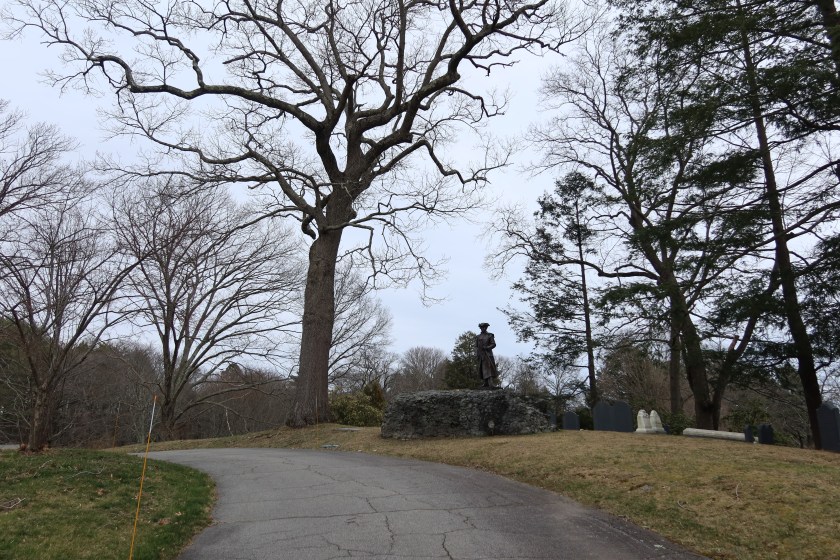
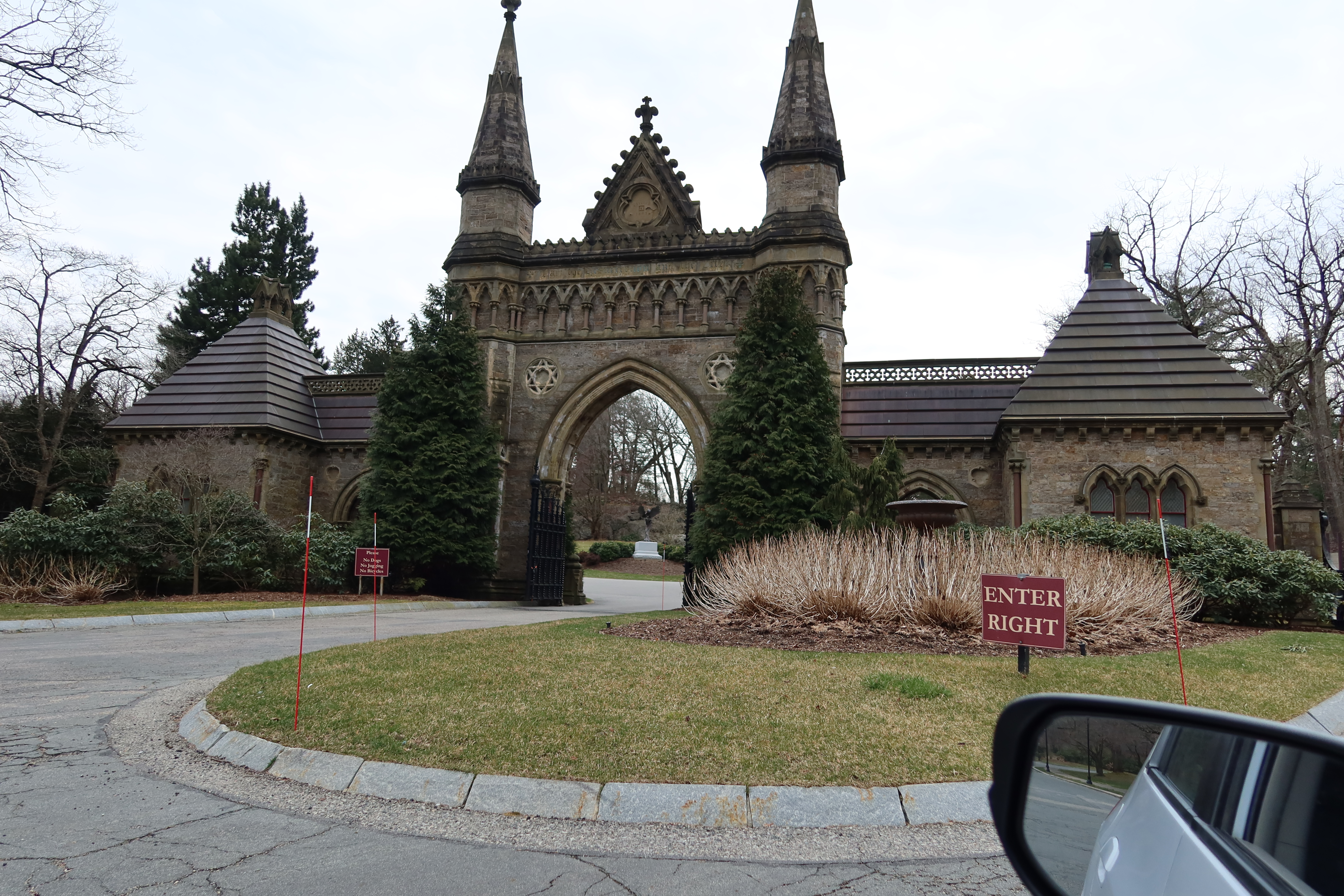
Forest Hills Cemetery in the Jamaica Plain neighborhood of Boston, Massachusetts.
Unsung Hero
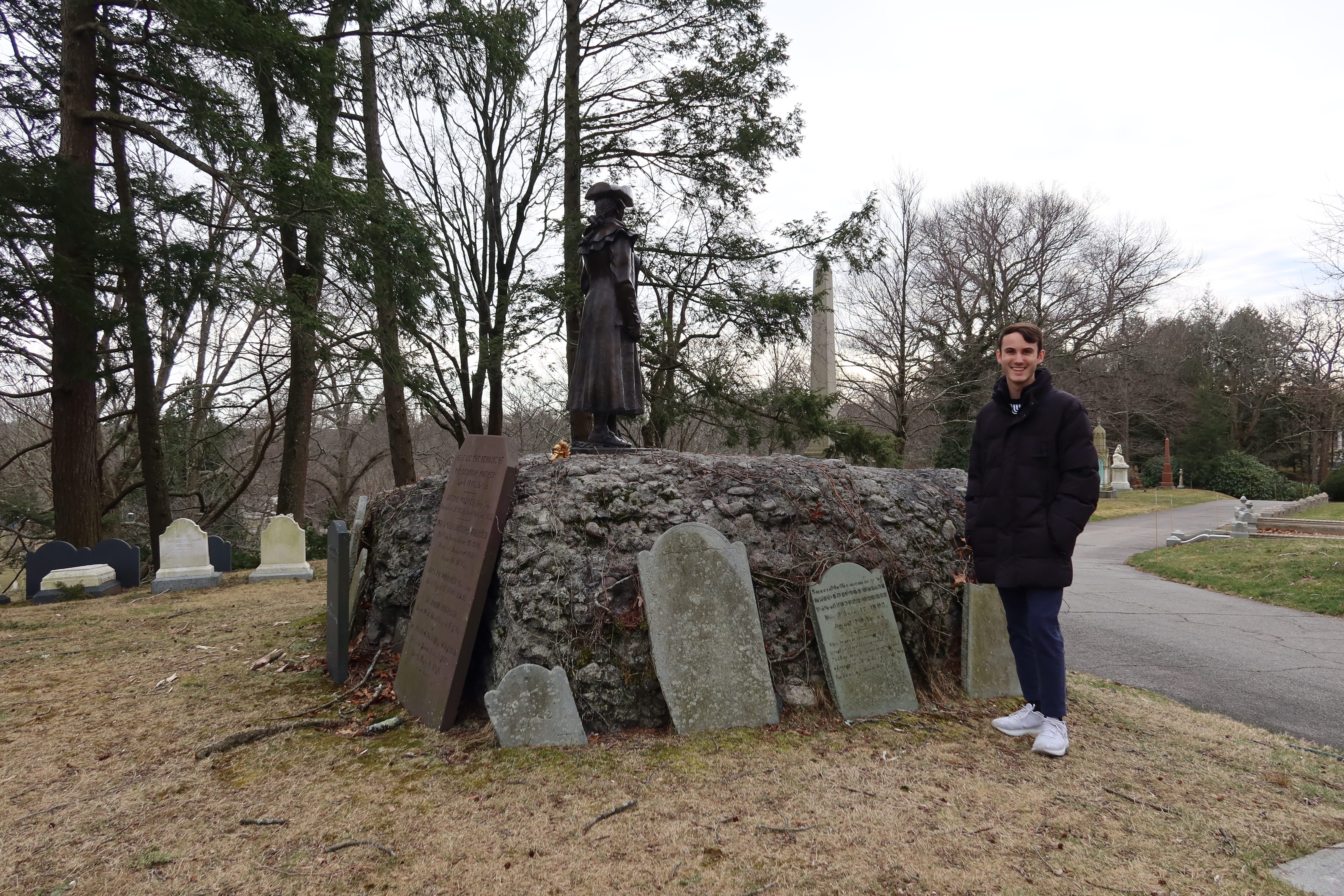
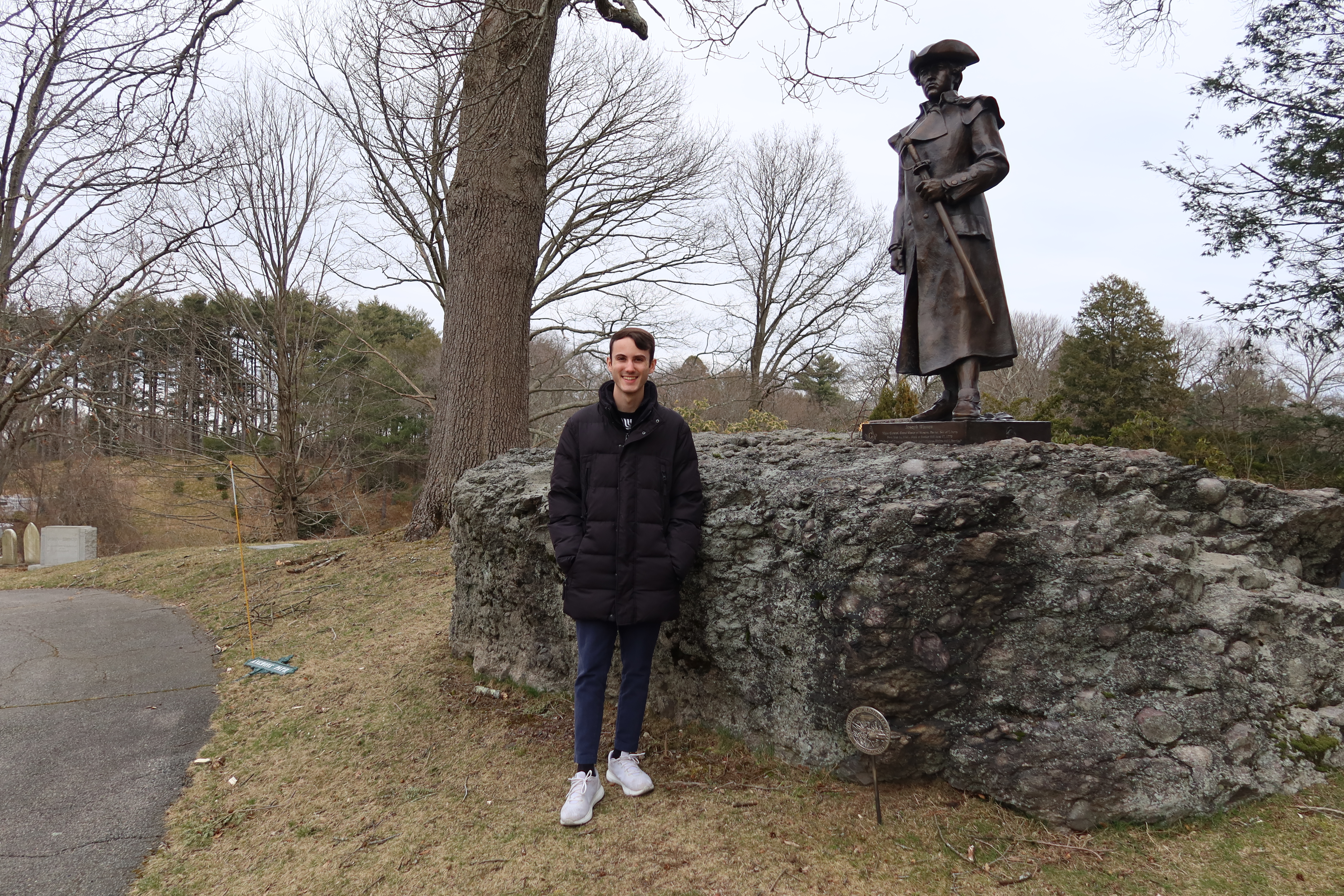
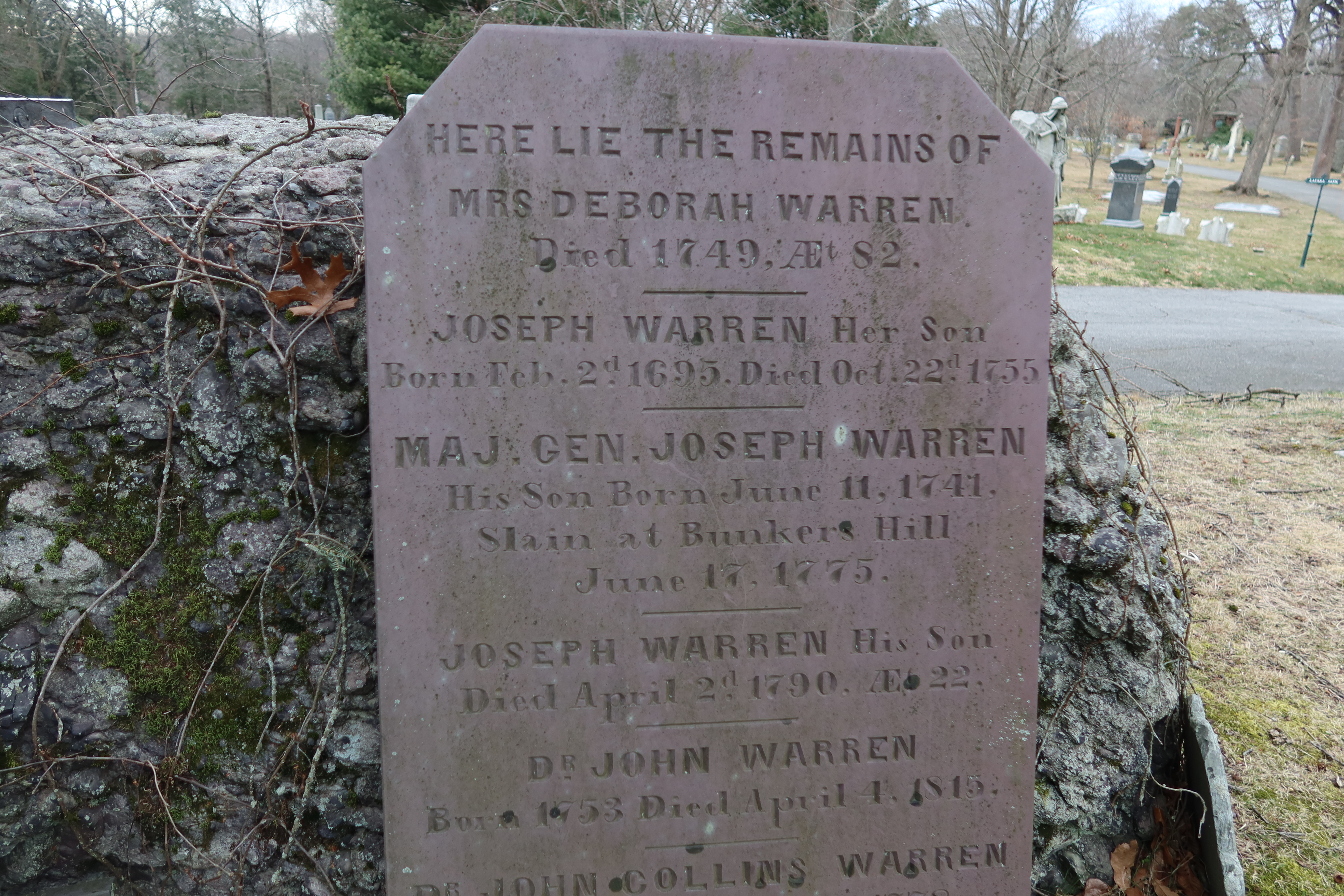
There were many unsung heros in the Revolutionary War. Dr. Joseph Warren (1741–1775) was a prominent Boston physician and dentist. He was active in the patriot movement in Boston, sevring as President of the revolutionary Massachusetts Provinicial Congress. He was also part of a colonial spy network. He was the unsung hero of Paul Revere and William Dawes’ midnight ride to warn of the British advance on Lexington and Concord. It was Warren who orchestrated the warning system which dispatched Revere and Dawes that night. Warren was a key leader in the American Revolutionary War effort. Although he was a Major General, Warren insisted on serving along the front line during the Battle of Bunker Hill on June 17, 1775. He was killed on the final British assault. He was only 34 years old!
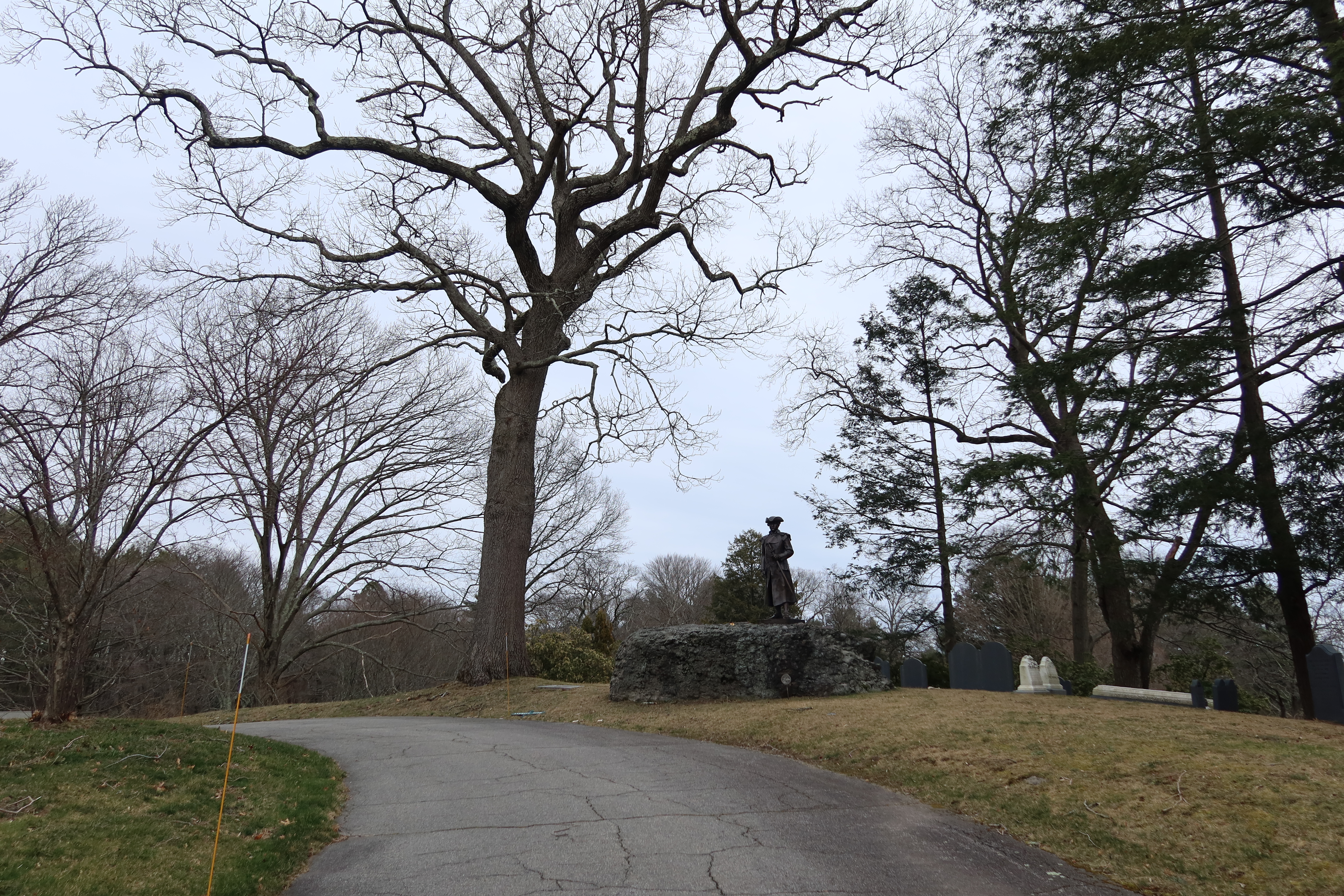
Over the years, Dr. Joseph Warren’s graveside has been moved several times. On one of our visits to Boston, we found and drove through the huge cemetery in Boston where his family’s burial site was finally located. We drove along the many roads in the cemetary and eventually located the statue marking Warren’s gravesite. We found it! It was a fitting monument — a huge stone on a knoll rise. Above is a photo of the entrance to the cemetary. Here are several photos of the gravesite.
Playing “Yankee Doodle” on the Mountain Dulcimer in DAD Tuning
“Yankee Doodle” is usually played at a peppy, lively and upbeat tempo. The song was originally a military march or fife tune with the march time signature of 4/4, or four beats per measure. Now it is considered to be an American folk tune, but still it is sung in a peppy manner. The tempo of this military march is usually placed at a moderate clip, 100 to 120 beats per minute (BPM), or two steps per second — if you are keeping track.
Sometimes this tune is noted in the 2/4 time signature including eighth notes rather than quarter notes. I find that it easier to use a “back and forth” strum to play the eighth notes at a quick tempo. Although it may be easier to play the tune in 2/4 time notation, it is more difficult to “read” the tablature. Plus, if. you are playing with a group, everyone needs to “be on the same page” for how to strum — or it doesn’t work.
On the dulcimer, this tune seems awkward for me for play in the 4/4 time signature. Most of the notes are quarter notes. Strumming only outward is laborious. You can play a “bump diddy” strum, if not going too fast. Strumming back and forth — as if the notes were all eighth notes — seems to work better, especially if playing at a quick tempo.
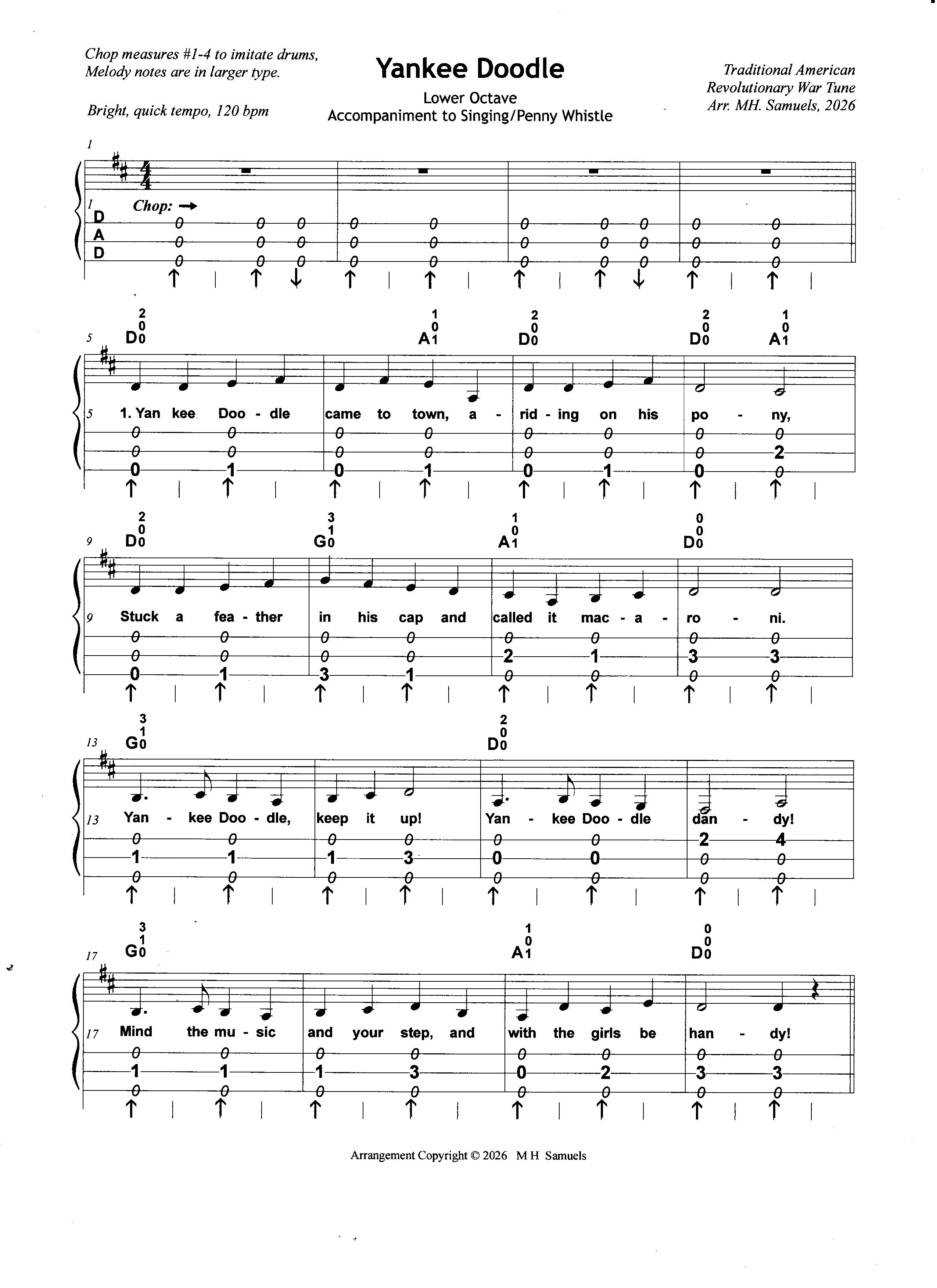
A second alternative is to strum only on the first and third beats of each measure. It provides a “harmony.” This “harmony” version works when accompanying a singing voice or someone playing a penny whistle.
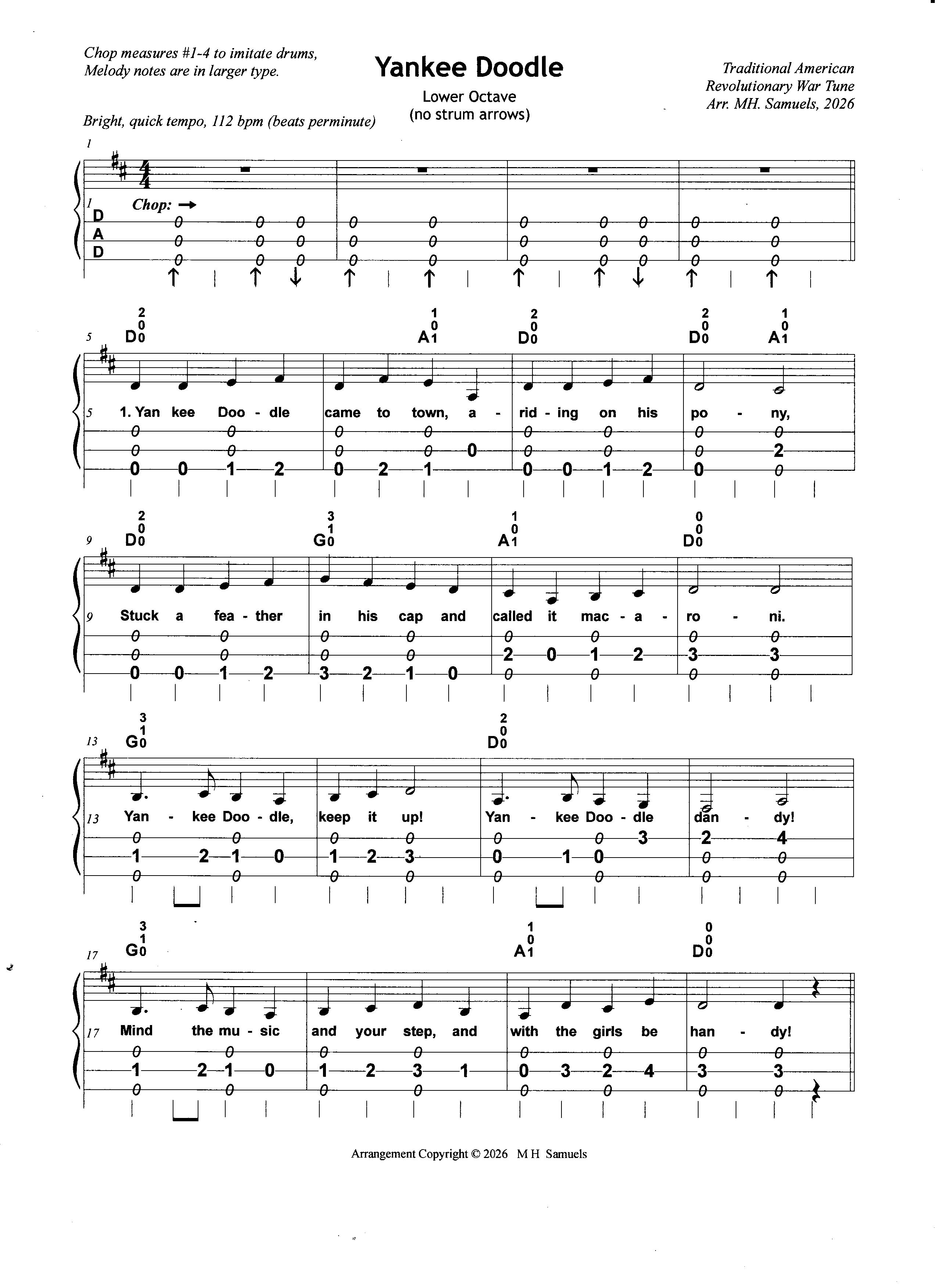
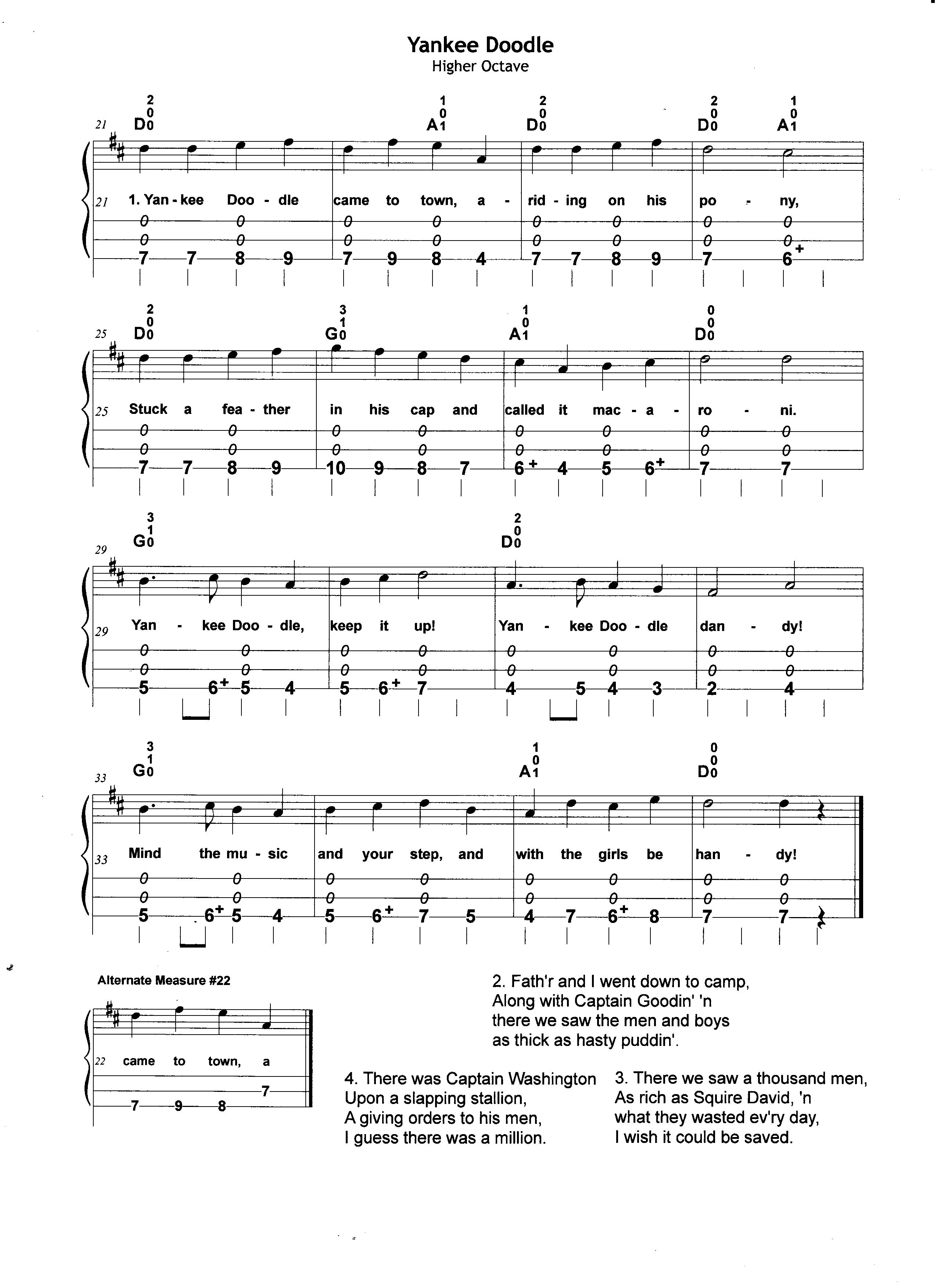
In the Key of D and DAD tuning on the dulcimer, this song goes to notes below the key note and below the “0” fret on the melody string. So, some of the melody notes go over to the middle string — just continue to strum all the strings. To play an octave higher, the tunes begins at the 7th fret and goes up. (This song might be better suited for the Key of G in DGD tuning.) This song requires you to “stretch” your playing. Good luck.
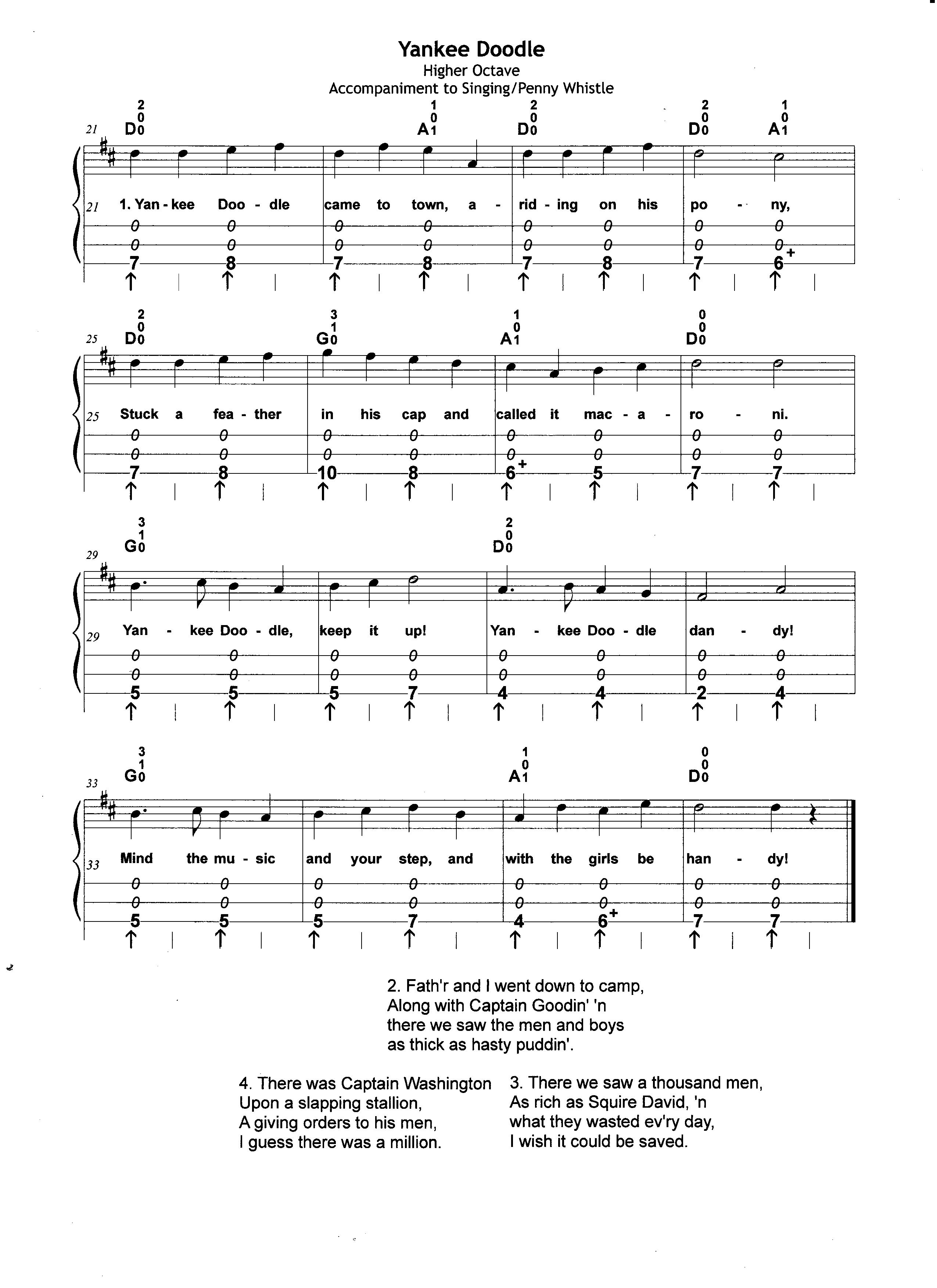
I included a scaled down version with only melody notes plus a few harmony notes. Strum across all the strings even when they go to the middle string. (Tablature numbers for “open” frets are omitted so that it is easier to see the melody strings.) Fill in harmony notes as needed. I included both a lower and higher octave version.
I also included a version with strums on the first and third beats — to harmonize along with singing. Fingering patterns for chords are shown about the standard notes.
Both versions have a 4-measure intro for strummng. Try chopping the strings for a drum-like effect.
Enjoy this tune for our 250th year celebration. Those early colonists took great risk to their lives and families and made many sacrifices for our country. Let’s not forget our “roots.”
Below are jpeg images of the tune, followed by PDF versions which you can download, print out and share.
Here are the names of several other Revolutionary War era tunes which come to mind:
Wild Horses Stony Point,
MacPherson’s Rant,
0ld 1812,
Battle of New Orleans,
Girl I Left Behind Me,
Washington’s March,
Over the River to Charley,
The Rosetree,

